
Little Sisters of the Poor is an organization that provides care for the elderly throughout the world. It was founded by Jeanne Dugan in France in 1839. This recital was held at their Washington, DC, location. Although the weather was beautiful on Saturday, April 18th, the notorious DC traffic delayed two of the seven participants, and some reshuffling of the program had to be done. Nevertheless, the recital began at 3:00 p.m. as scheduled. There were four pianists, a flutist, a violinist, and a singalong on the program. In addition to the 17 residents who partially filled the large auditorium, it was an honor to have Monsignor Bazan and his brother in attendance as well.

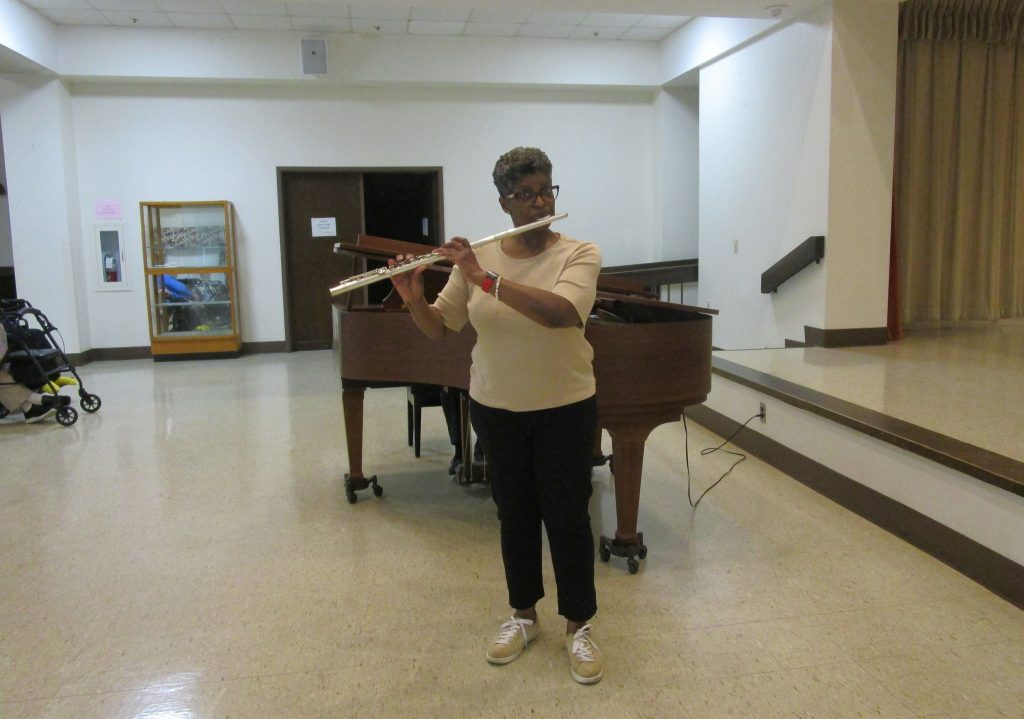
Sharon Atteh-Chi was the first performer. She played Mvt. 3 Allegro from Sonata No. 1 in F major for flute by German composer Georg Philipp Telemann (1681–1767), and Minuet in G major Etude for flute by Italian flutist and composer Guiseppe Gariboldi (1833–1905). The Allegro was lively and tuneful while the minuet was more dance-like. The audience enjoyed both pieces.
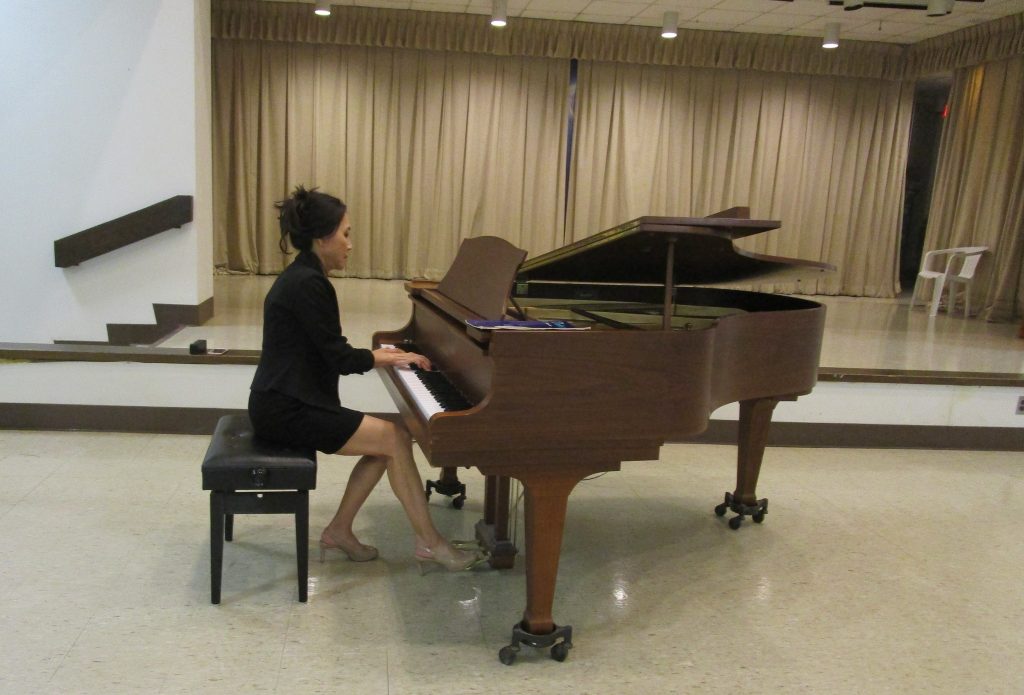
Pianist Jung Yeon Kim followed with two well-known pieces. She played “Claire de Lune” by French Impressionist composer Claude Debussy (1862–1918), and the Adagio Cantabile movement from the Pathetique Sonata by German composer Ludwig van Beethoven (1770–1827). Playing from memory, Jung captured the mood of the Debussy piece with her sensitive playing and perfect dynamics. Then in the Beethoven piece, she demonstrated her musical skill in highlighting the melody and making it sing over the moving lower parts. It was a beautiful interpretation.
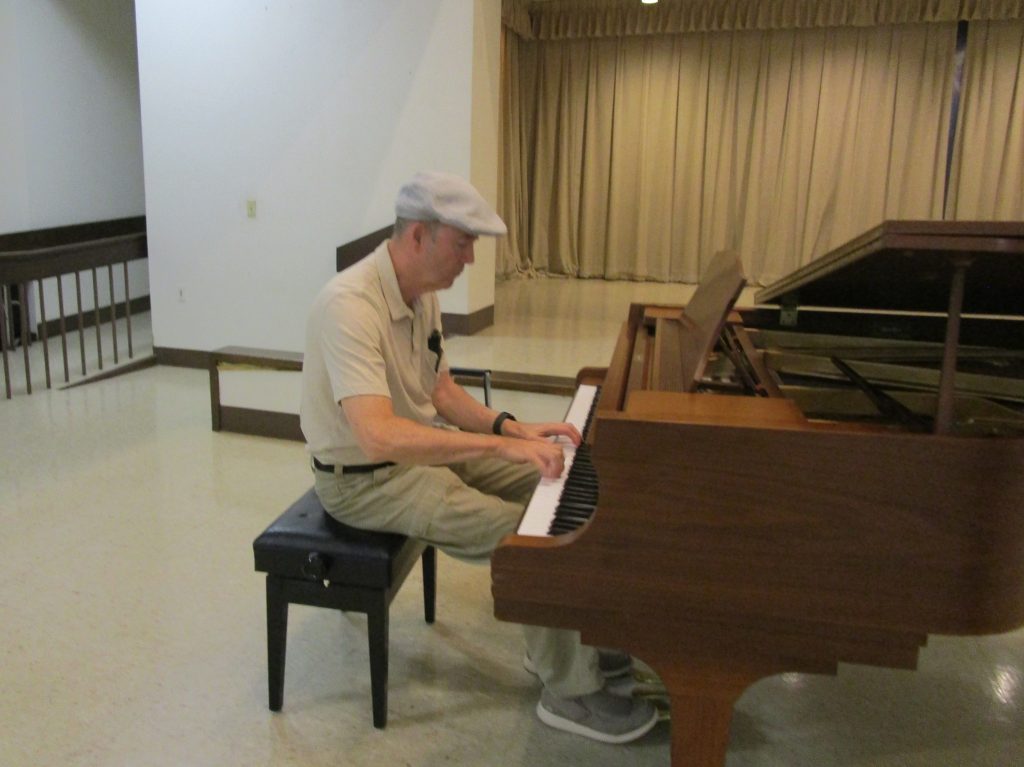
Mark Ross is both a pianist and a composer. He played Song Without Words No. 1 by German composer Felix Mendelssohn (1809–1847), Theme from “Eight is Enough” by American composer Lee Holdridge (b.1944), and his own composition “Restless Fingers.” These were three contrasting pieces that presented different levels of complexity with “Restless Fingers” being the most challenging as it utilized the entire keyboard with lots of energetic movement. The Kawai Grand piano responded well to the flurry of activity and Mark definitely held the residents’ attention. He left no doubt that he is just as good a composer as he is a pianist.
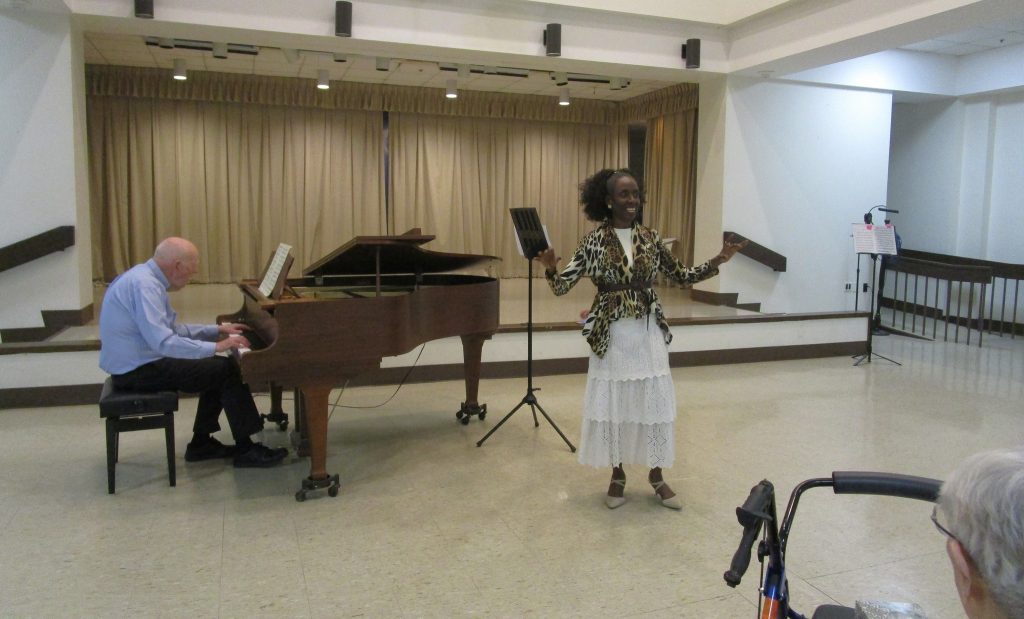
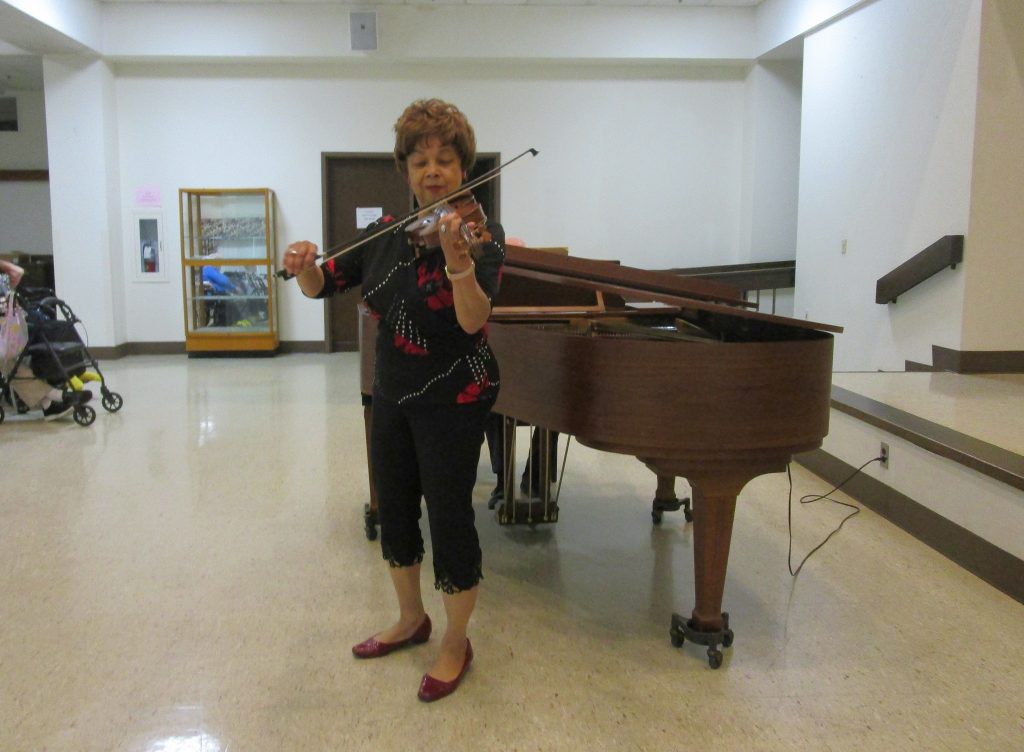
Violinist Stephanie Dailey followed with four short songs all from the famous musical “The Sound of Music.” Accompanied by her Bluetooth speaker she played, “The Sound of Music,” “How Do You Solve a Problem like Maria,” “Edelweiss,” and “Climb Every Mountain.” The moment Stephanie began playing we heard a gorgeous soprano voice coming from the far-left corner that filled the room. A resident named Patrice was seated in a wheelchair at the end of the front row and she was singing her heart out. She knew the words to all four songs! It was a delight to hear her, and it encouraged the other residents to sing as well.
Pianist Claudette Sikora played next. Her first piece was “Mattinata” (Italian for “morning”) by Italian composer Ruggero Leoncavallo (1857–1919). This romantic song is about a lover who is beside himself with love for a lady. All he wants is for her to wake up at dawn and love him. With her gentle touch, Claudette produced a romantic atmosphere with the lyrical melody singing above arpeggiated chords in the left hand. Her second piece was Ave Maria by French composer Charles Gounod (1818–1893) and Johann Sebastian Bach (1685–1750). Again, Claudette’s tender touch was perfectly suited to this piece and her sensitive interpretation was well received.
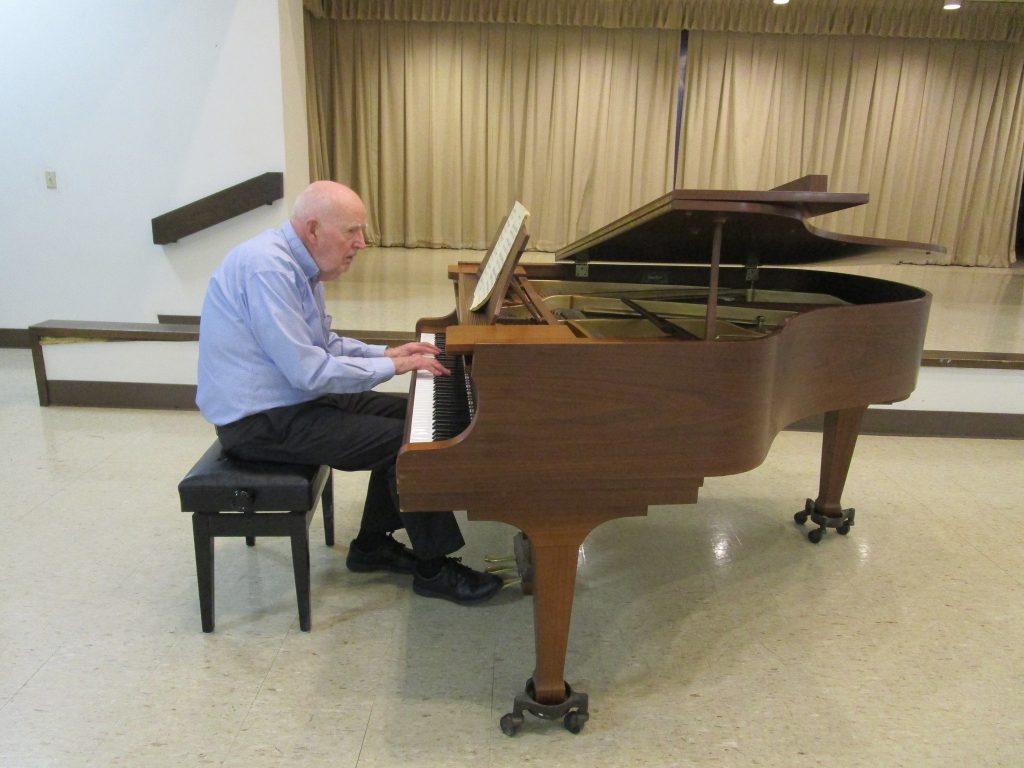
Russell Munk was the last pianist, and he played Intermezzo No. 1 in E minor by Mexican composer Manuel Maria Ponce (1882–1948), “How High the Moon” by American composer Morgan “Buddy” Lewis (1906–1968), and “Sunrise Serenade” by American pianist and bandleader Frankie Carle (1903–2001). The Intermezzo was peaceful and a bit nostalgic because of the minor key. “How High the Moon” is a 1940 jazz standard with lyrics by Nancy Hamilton. It was a fun piece and Russell obviously enjoyed playing it. His last piece, “Sunrise Serenade,” again generated humming and singing in the audience as several people knew it. These pieces were well suited to a senior audience.
Russell remained at the piano to accompany Carol Henry, who led a singalong of the song “Goodnight Irene” made famous by American Blues musician Huddie “Lead Belly” Ledbetter (1888–1949). Stephanie and Claudette distributed the written words to everyone. This song was quite a hit with the residents, and they sang out heartily especially on the infectious chorus. “Goodnight Irene” was an excellent choice to end the recital.