
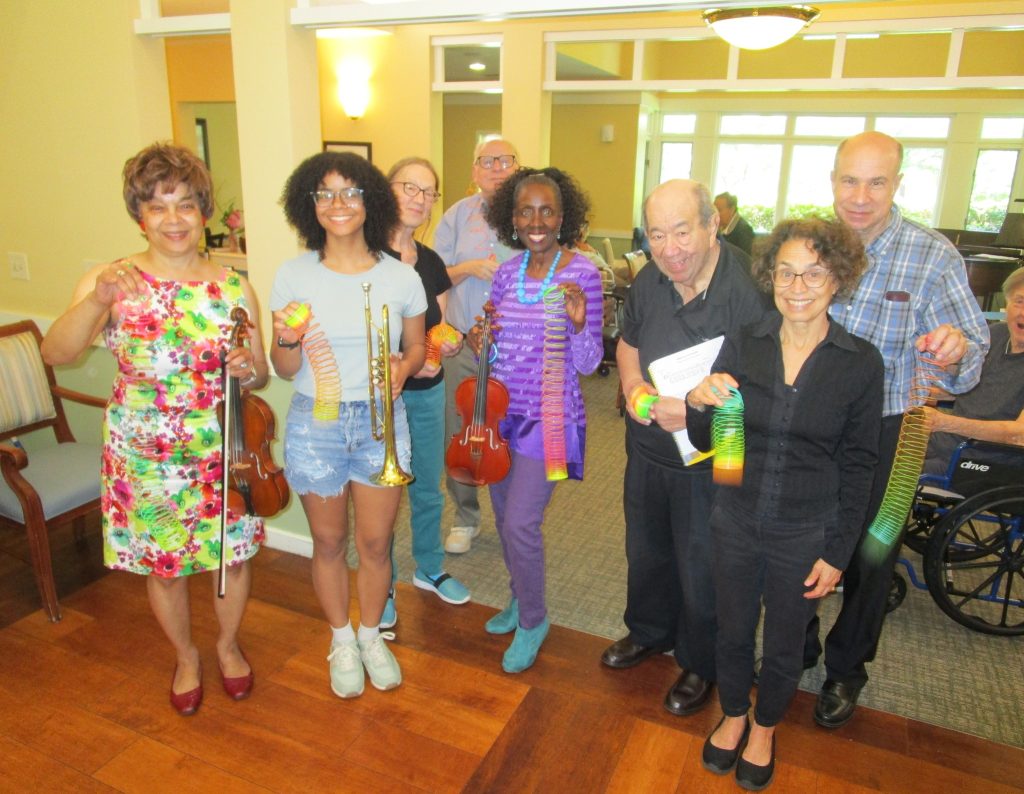
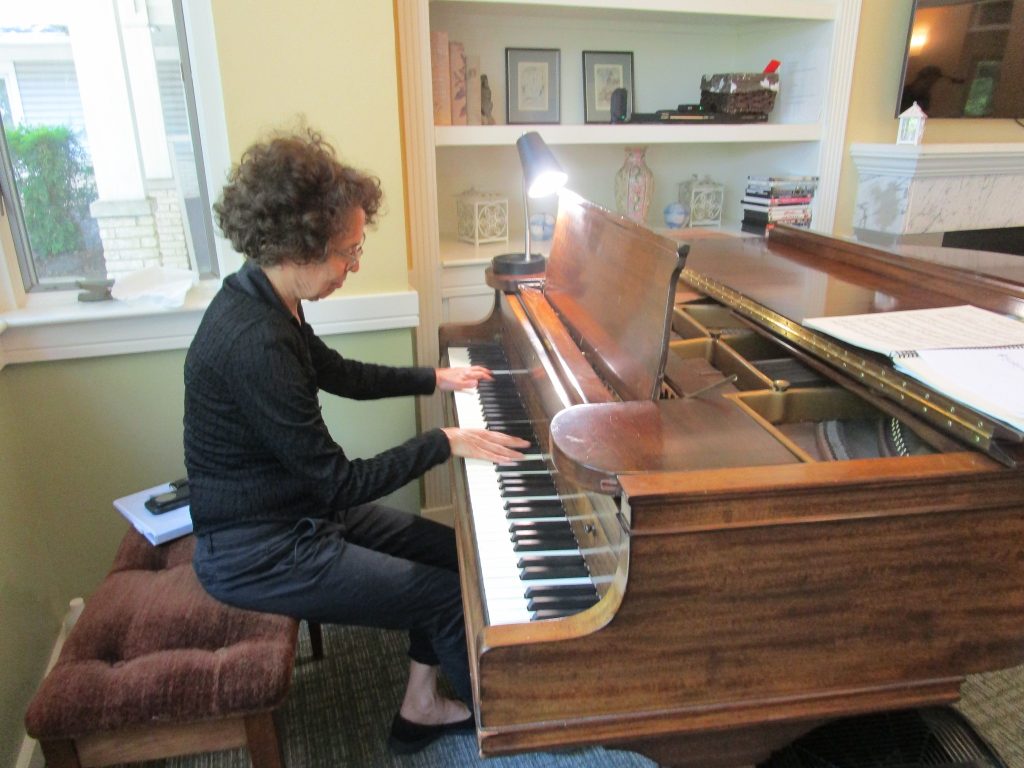
Raphael House Assisted Living is a smaller venue in the Rockville suburbs. There were five pianists, two violinists, a trumpeter, and a singalong on the program. Everyone arrived early to try out the Chickering Grand piano. There were 15 residents in the room when the recital began at 2:00 p.m. with our first pianist, Alberto Gamez.
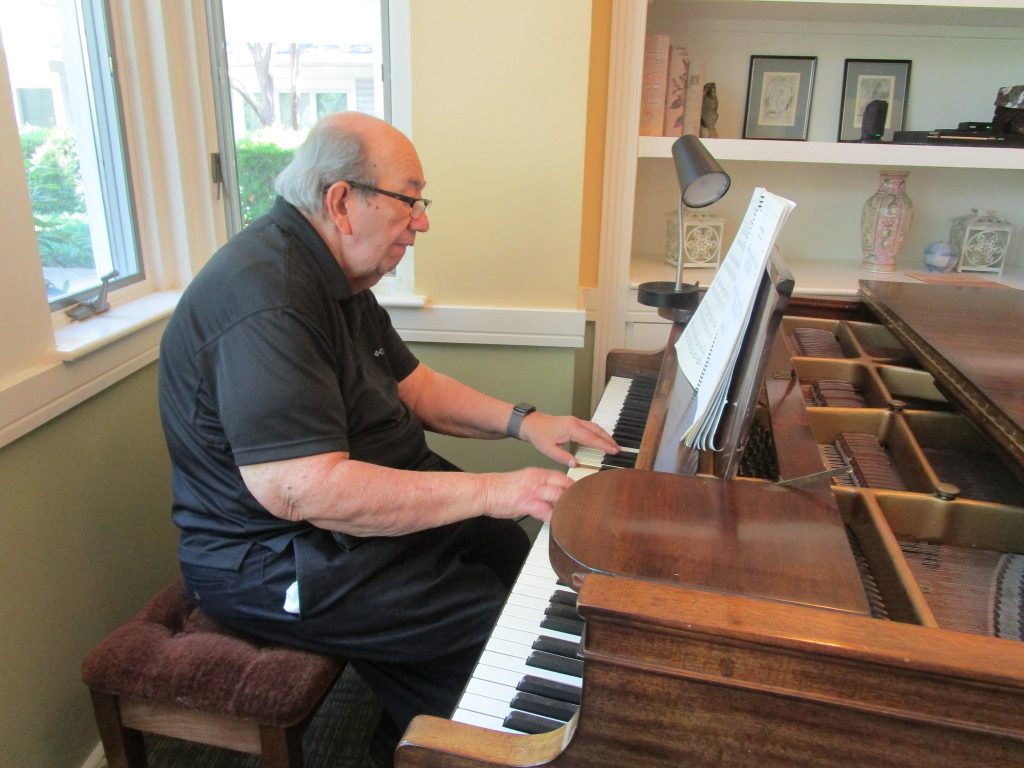
Alberto played a Reduction for piano by Belgian Romantic composer Jean Louis Gobbaerts (1835–1886) from the comic opera La Fille du Regiment. The story depicts a young orphan girl who was raised by an army regiment as their mascot, and it begins at the moment of her first stirrings of love. The music is buoyant and dance-like. With his well-honed musical sense, Alberto had no difficulty conveying its charm.
Jodi Lipson was the second pianist. She played “Le Sapin” (The Spruce) Op. 75 No. 5 by Romantic Finnish composer Jean Sibelius (1865–1957). The Spruce tree was a staple of the Finnish forest, and Sibelius depicts it poetically in the piece using a rich tapestry of arpeggios together with a melodious legato melody, which Jodi articulated well. Sibelius would have been pleased with her performance.
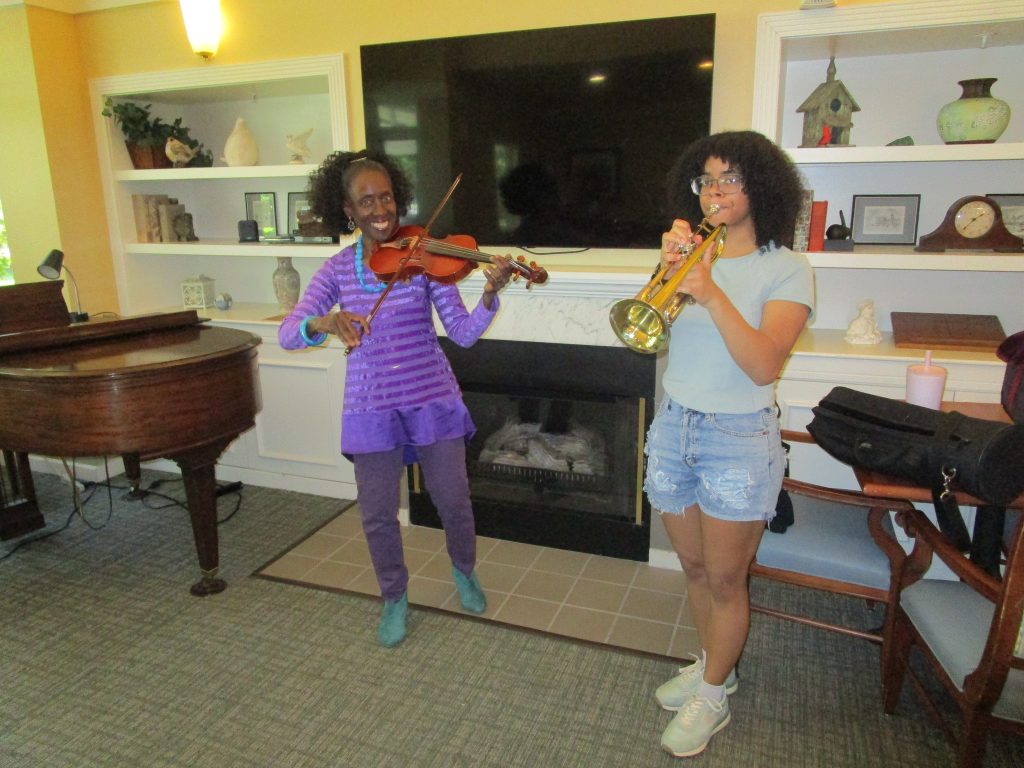
A duet of the most unlikely bedfellows followed featuring Joelle Harris on the trumpet and Carol Henry on the violin. They began with two short pieces by Hungarian composer Bela Bartok (1881–1945) called Menuetto and Maypole Dance. The Menuetto opened with double-stopped violin chords before the trumpet entered with a warm melody. The Maypole Dance was tuneful with the violin playing the melody this time. Their third piece was the familiar “Edelweiss” from The Sound of Music. Despite the unique combination and different timbres, the two instruments balanced each other well and produced a truly harmonious sound.
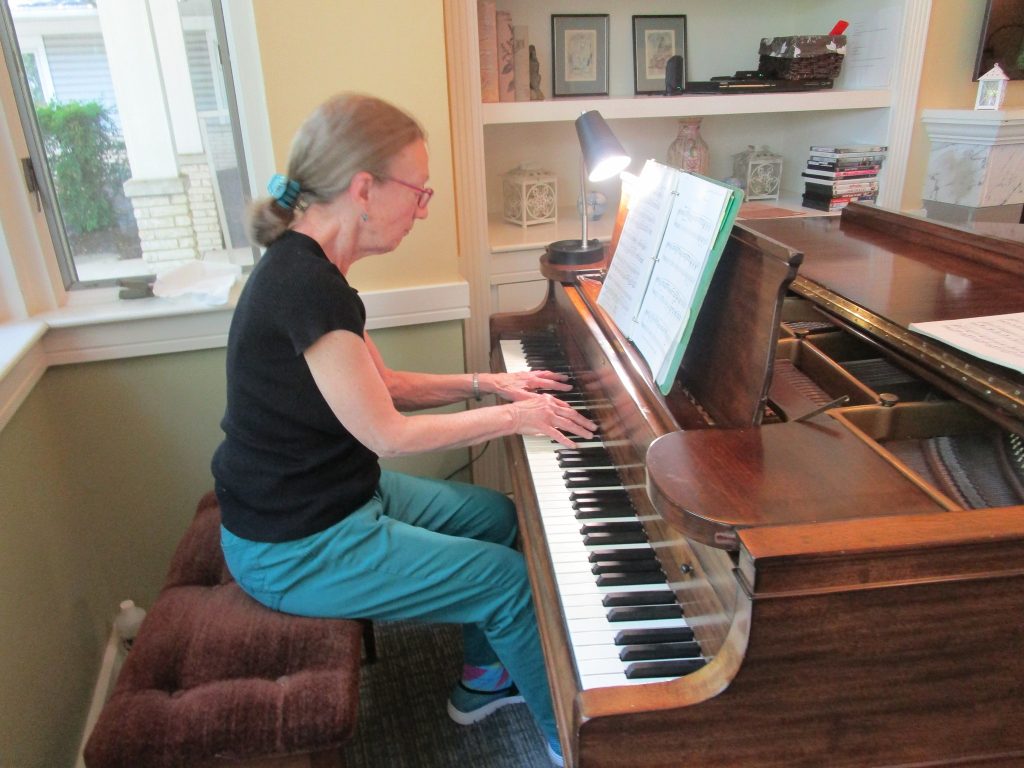
Chris Witsberger was the third pianist. Her first piece was “Venetian Boat Song” Op. 30 No. 6 from Songs Without Words by German composer Felix Mendelssohn (1809-1847). Mendelssohn wrote three famous boat songs all in minor keys. This one is in F# minor. Chris’ interpretation of the music was beautiful, and she succeeded in portraying a gondola gently floating down a water-filled canal. Her second piece would have been Debussy’s “Clair de Lune,” but when Chris tried the piano and discovered a “wonky” sustaining pedal, she wisely decided to switch to a Prelude Op. 16 No. 3 in Gb major by Russian composer Alexander Scriabin (1872–1915). Marked Andante Cantabile, the Prelude was serene and soothing to the ear.
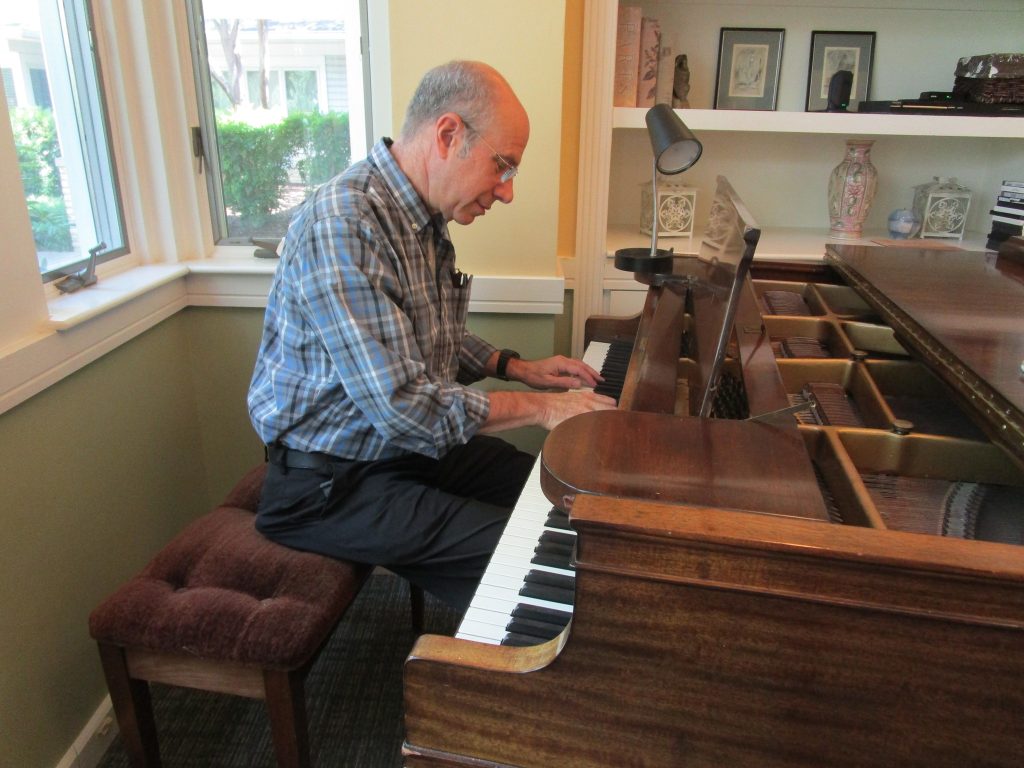
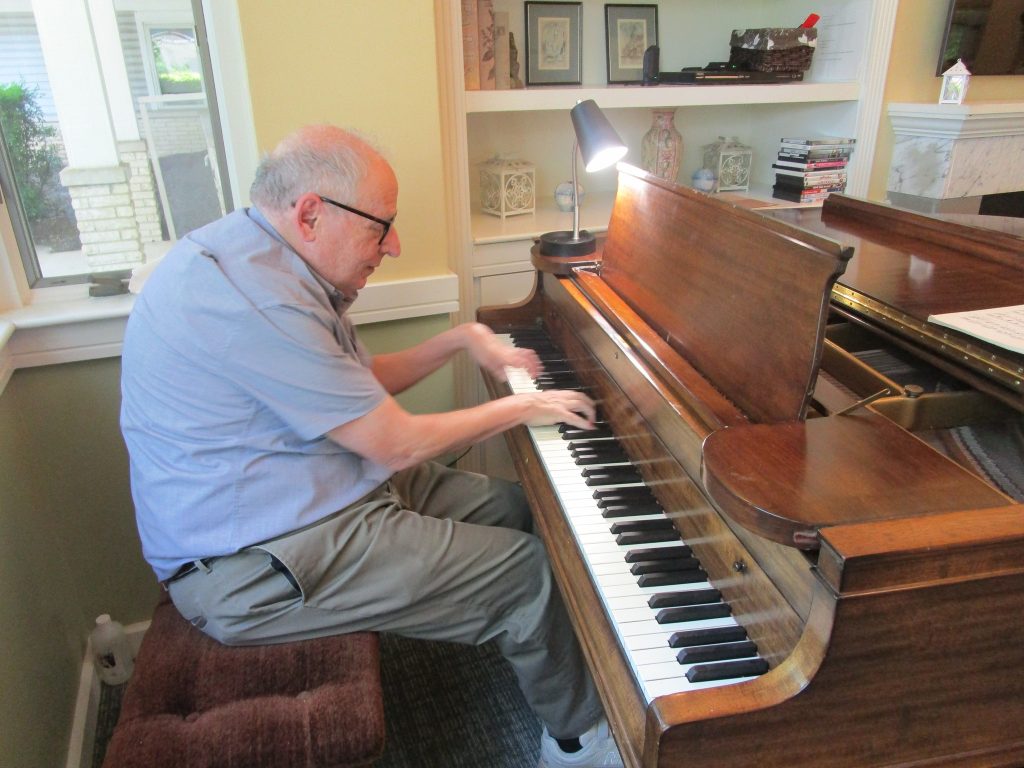
Wayne Landsman is always a breath of fresh air, and he adds welcome variety to the program because his piano arrangements are uniquely his. Playing from memory, Wayne’s first piece was “Heart and Soul” by American composer Hoagy Carmichael (1899–1981). Composed in 1938, “Heart and Soul” is one of 50 songs Carmichael wrote that achieved hit record status. As Wayne played, the upbeat and catchy melody animated the residents. His second piece was “One Note Samba” by Brazilian composer Antonio Carlos Jobim (1927–1994). The song is a bossa nova and jazz standard and opens with a long string of the repeated note “D.” Wayne’s playing was vivacious and had people tapping their feet to the beat.
Our fifth and last pianist was Gregory Riviello who played “Sheep May Safely Graze” from the “Birthday Cantata” by Johann Sebastian Bach (1685–1750), arranged by Egon Petri. Gregory’s nuanced touch was well suited to the lyrical melody of this famous composition. His second piece was Etude in E major Op. 10 No. 3 by Polish composer Frederic Chopin (1810–1849). Chopin wrote 27 Etudes for the piano to help strengthen the fingers. The E major is nicknamed “Tristesse” which is French for sadness. Gregory approached the piece with controlled passion and showcased its beauty by carefully highlighting its soulful melody above the moving chords underneath. Coupled with his refined dynamics, he produced a touching rendition of this masterpiece.
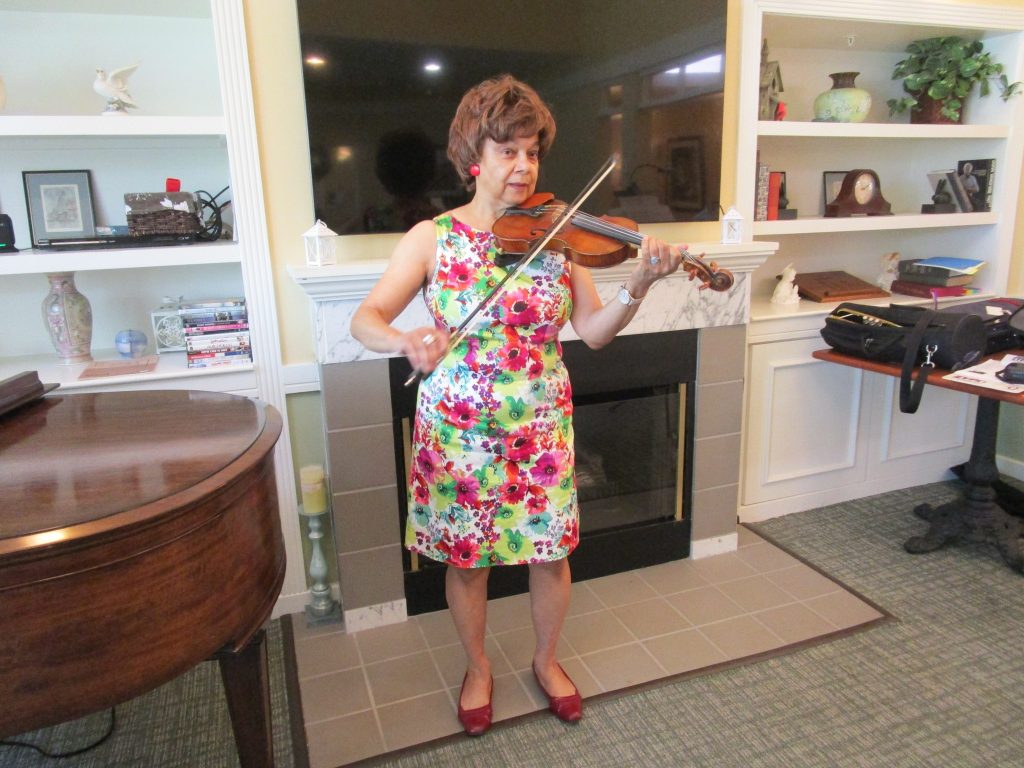
Violinist Stephanie Dailey followed with three pieces from the movie The Sound of Music. They were “The Sound of Music,” “How Do You Solve a Problem Like Maria,” and “Climb Every Mountain” by Americans Richard Rodgers (1902–1979) and Oscar Hammerstein II (1895–1960). Accompanied by her Bluetooth speaker, Stephanie energized the audience, and they responded warmly by singing and humming along as she played the very familiar songs.
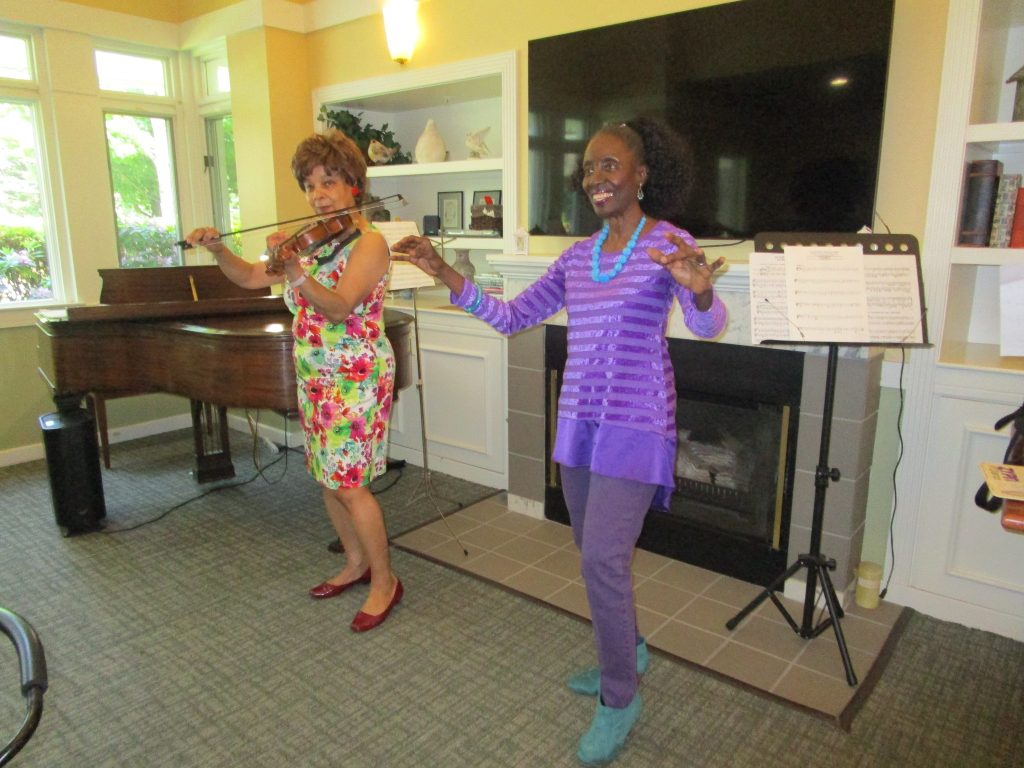
Stephanie remained at the front to provide violin accompaniment for the final singalong which was led by Carol Henry. Again from The Sound of Music, words were distributed for the song “Do-Re-Mi.” The faces of the residents lit up as they recognized the music, and they eagerly participated in singing this lively song. The music ended on a loud dominant cadence with a high tonic note, which both Stephanie and Carol accented together. This resulted in spontaneous and energetic applause from the residents. It was a perfect finale to a lovely recital!