
Except for Jack Stabile, who lives in Virginia, the commute to the Waltonwood Ashburn Retirement Community was an hour or more for the participants in this recital who came from Germantown, Clarksburg, Bethesda, and Silver Spring in Maryland. Nevertheless, the drive through the Virginia suburbs was scenic and Saturday November 16th was a beautiful cool sunny day.
On arrival at the huge facility, the six participants were greeted with a spacious hall which had imposing white pillars supporting very high ceilings with skylights. The piano was a shiny black Pearl River Grand located in the center of the room. As we tried the well-tuned piano, we discovered that the acoustics in the room were so good that the sound travelled all the way back to the front desk. The 25 residents started gathering around 10:45 a.m., and after a brief introduction about the AMSF, we began the recital promptly at 11:00 a.m. There were five pianists, a violinist, and a singalong on the program.
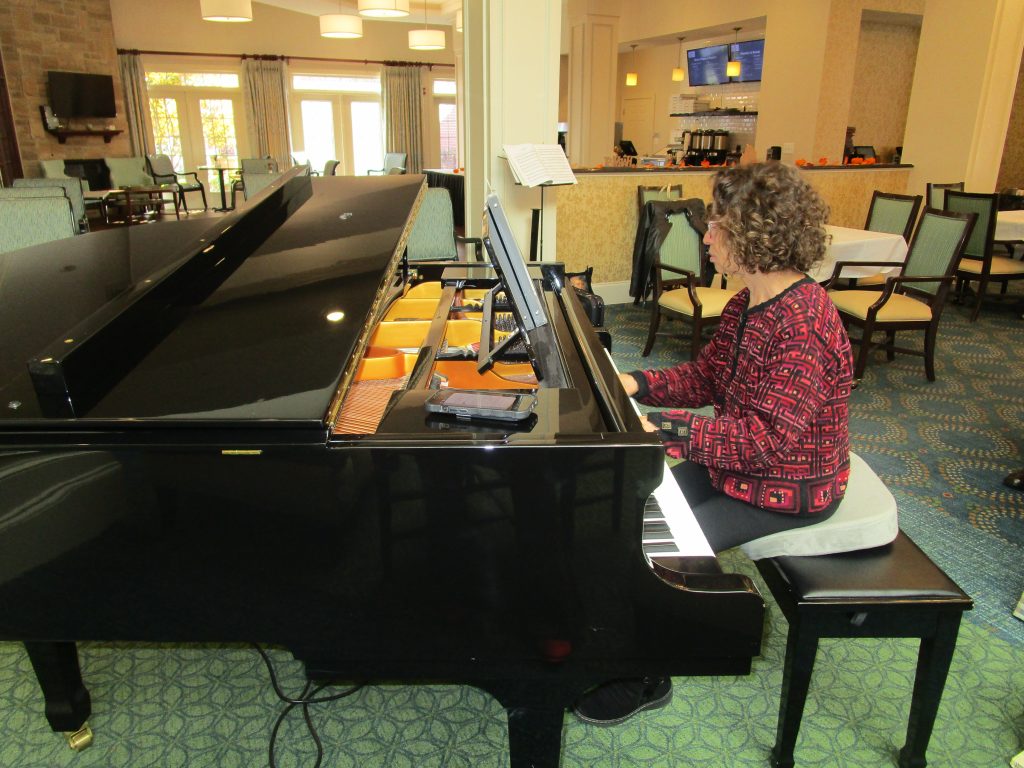
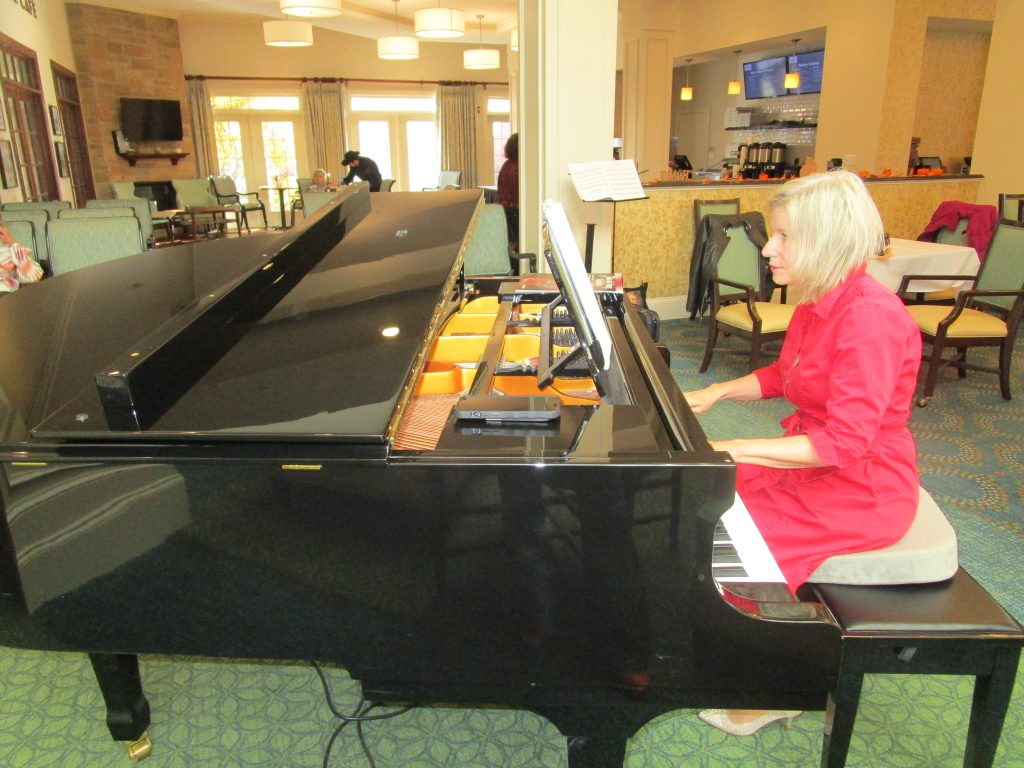
Jodi Lipson opened with the first movement of Sonata No. 11 in A major KV 300(i) (331) by Wolfgang Amadeus Mozart (1756 – 1791), who was regarded as one of the greatest composers in the history of Western music. When he wrote this Sonata in 1783, Mozart was inspired by Turkish Janissary bands which were the world’s oldest military marching bands. The first movement is a lyrical theme with six variations. Jodi was well prepared and her playing was musical and expressive throughout.
Three of the five pianists selected music by the great Polish composer Frederic Chopin (1810 – 1849). Alberto Gamez was the first of them. He played Chopin’s Prelude in A major Op. 28, No. 7 and his Nocturne No. 20 in C# minor Op. posthumous. The Nocturne, also known as “Reminiscence,” was composed in 1830 for Chopin’s older sister, Ludwika. It was published 26 years after Chopin’s death. This melancholic and poignant piece was played by holocaust survivor Natalia Karp for commandant Amon Goeth. Amon was so touched by her rendition that he spared her life. Alberto played both pieces with great sensitivity and ensured that the Prelude, though short, was just as impactful as the lengthy nocturne.
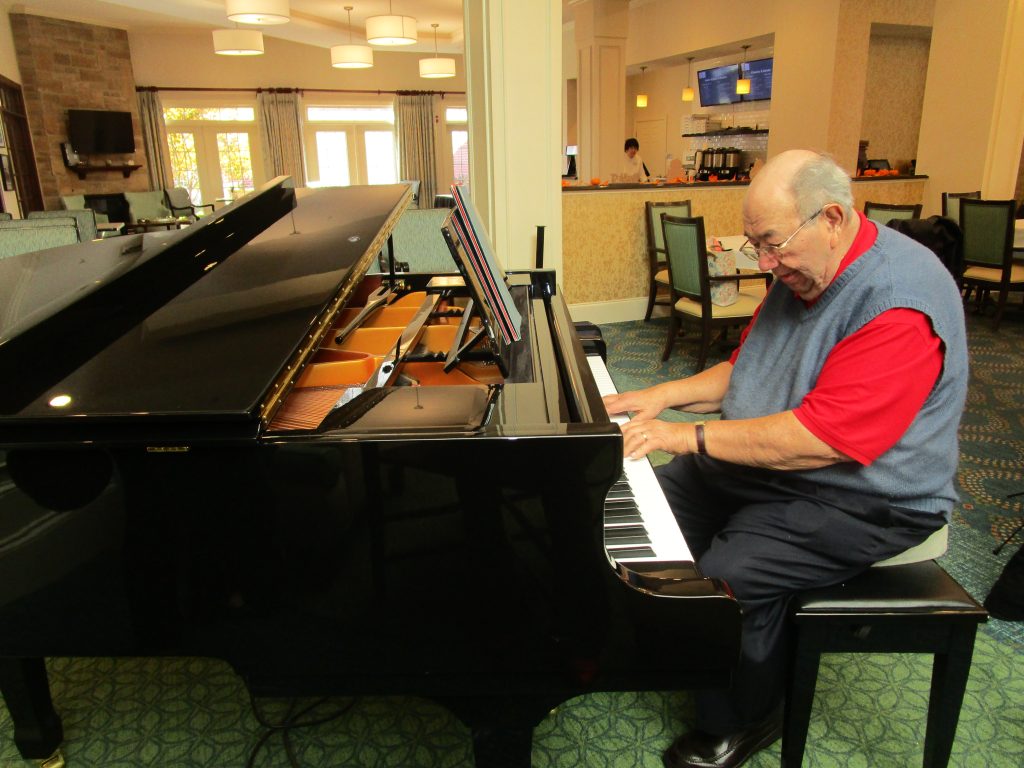
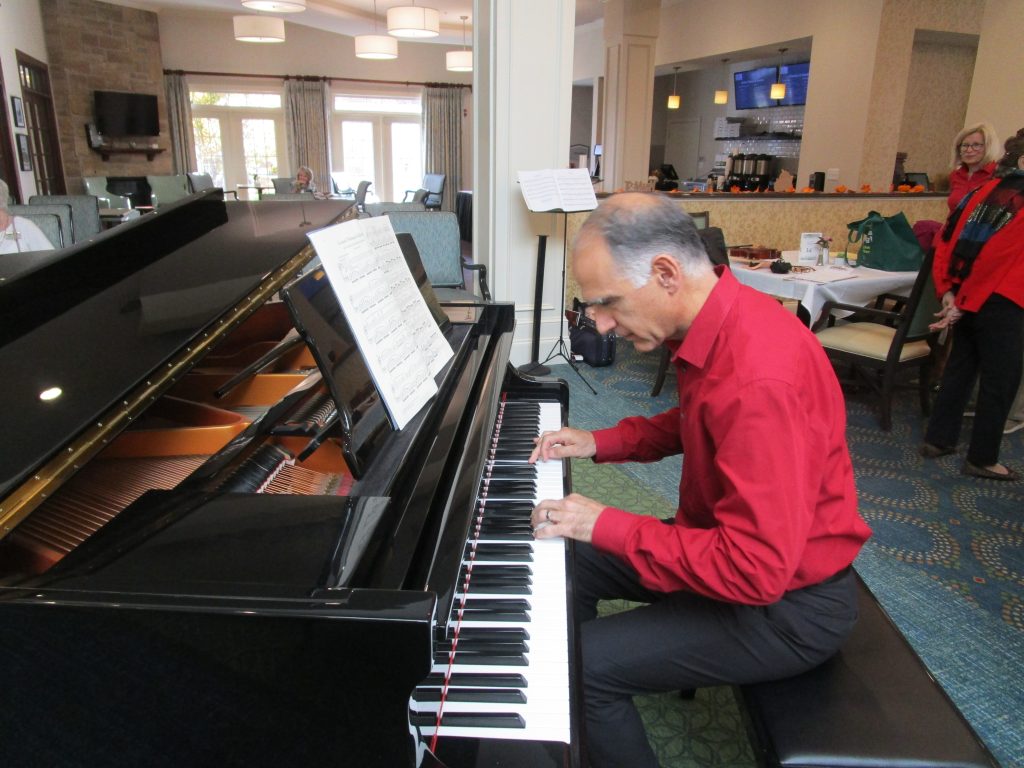
Mark Ross, who has distinguished himself as an impressive arranger, played next. He performed his own arrangements of “Pure Imagination” and “Misty.” The former was written in 1971 by Leslie Bricusse and Anthony Newley for the movie “Willy Wonka and the Chocolate Factory.” The latter was composed in 1954 by American Jazz pianist Erroll Garner (1921 – 1977), who was inspired on a long flight by the view of clouds and thoughts of his wife. Mark’s unique arrangements of these well-known songs were compelling because he utilized colorful jazz chords and made excellent use of the keyboard as his hands covered the entire seven octaves of the piano. Both pieces were well received by the audience.
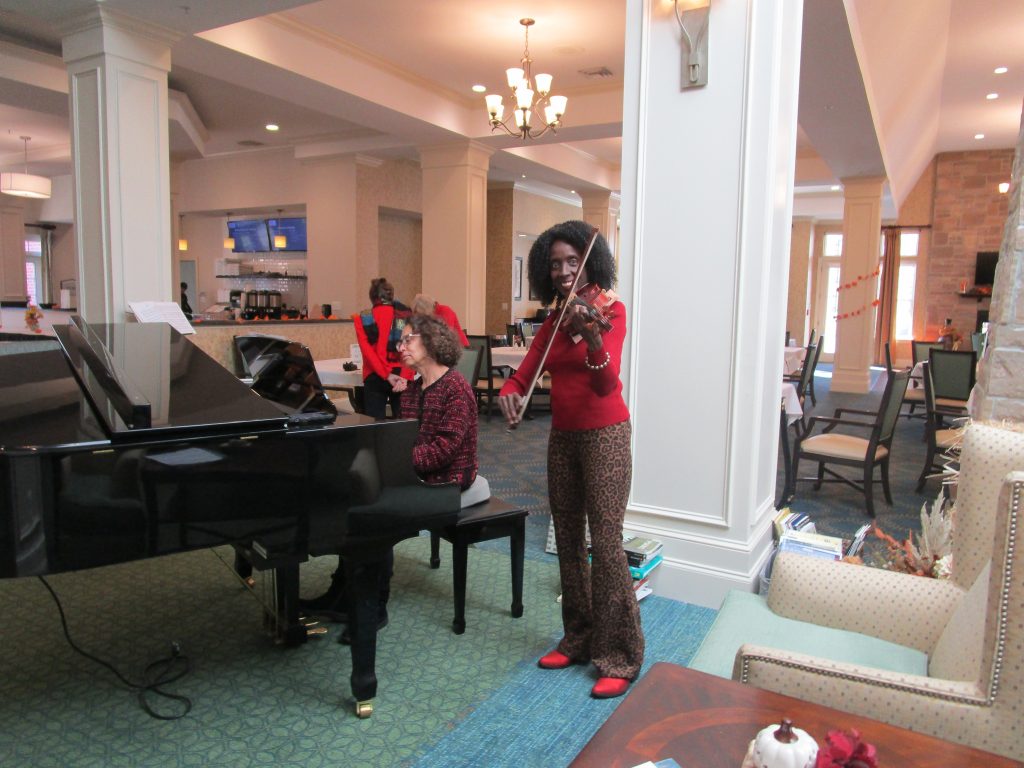
Following the string of pianists, violinist Carol Henry, then played a lively piece named “Marche” by Baroque German composer, Johann Sebastian Bach (1685 – 1750). Accompanied by Jodi Lipson on the piano, Carol smiled throughout the performance as she savored the spirited scale runs and the volatile dynamics of the piece. Known for his emotive depth, Bach would have been pleased.
Claudette Sikora was the second Chopin pianist. She began with Chopin’s Nocturne in Bb minor Op. 9, No. 1. Claudette’s tender entry captivated the audience and held their attention as she gracefully spun the beautiful melody over the legato broken chords in the left hand. She convincingly captured the ethereal sadness of the minor key and effortlessly followed Chopin’s ever-changing dynamics. The piece ended dramatically with repeated pianissimo chords that slowly died away. Her second piece was Ave Maria by Charles Gounod (1818 – 1893) and JS Bach. Though from a different period, this piece required the same tender touch as the Nocturne. As Claudette played the famous melody, we could hear some residents, with eyes closed, softly humming along in an atmosphere of peace and serenity. They truly appreciated her choice of pieces.
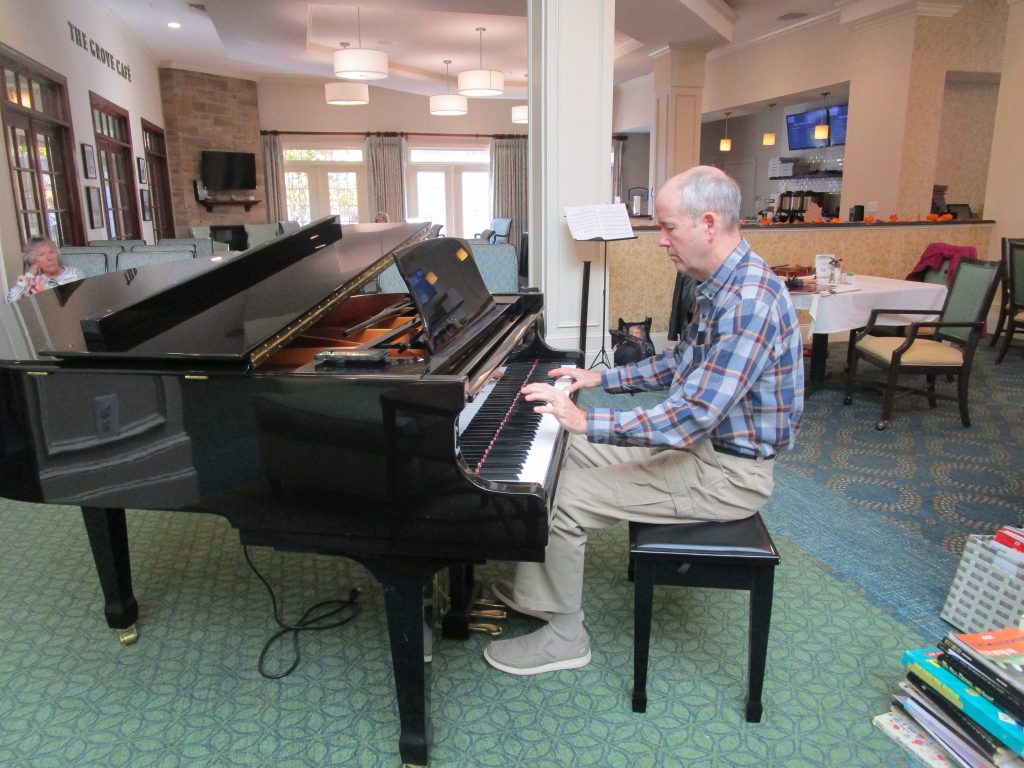
Our last pianist was Jack Stabile, who confidently attempted Chopin’s challenging Andante Spianato and Grande Polonaise Brillante Op. 22. The piece began with an arpeggiated left hand solo for a few measures before the singing melody joined and the music literally “took off.” Chopin composed the Grand Polonaise Brillante in 1830–31 for solo piano and then later adapted it for piano and orchestra. A few years later in 1834, he composed the Andante Spianato as an introduction to the Polonaise and the two pieces were performed together in 1835 at the Paris Conservatory. Jack’s focused and clean playing did justice to this majestic and demanding piece. Thanks to his strong keyboard technique, he handled the numerous scale runs, chromatic runs, and hand-crossings with apparent ease and rose to enthusiastic applause as he ended.
The finale was a seasonal singalong of two traditional Christmas Carols led by Carol Henry and Jodi Lipson who accompanied on the piano. After Mark and Claudette distributed the printed words, the residents joyfully sang “Silent Night” with words by Joseph Mohr (1792 – 1848) and music by Francis Gruber (1912 – 1948), and “O Come All Ye Faithful” by John Francis Wade (1711 – 1786). It was heavenly to hear the residents fill the hall with their resonant voices.
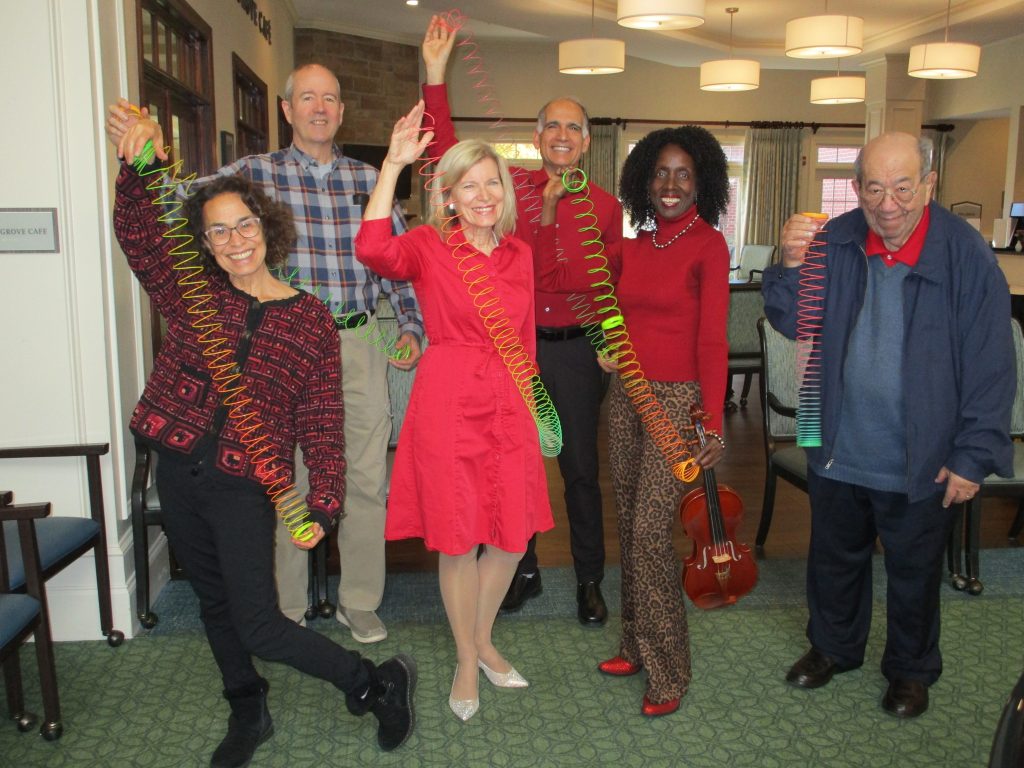
After the recital, several residents surrounded the players to congratulate and thank them for the performance. Conversations continued for so long that there was quite a delay in taking our final group photo. All six performers left Waltonwood with a deep sense of fulfillment.