
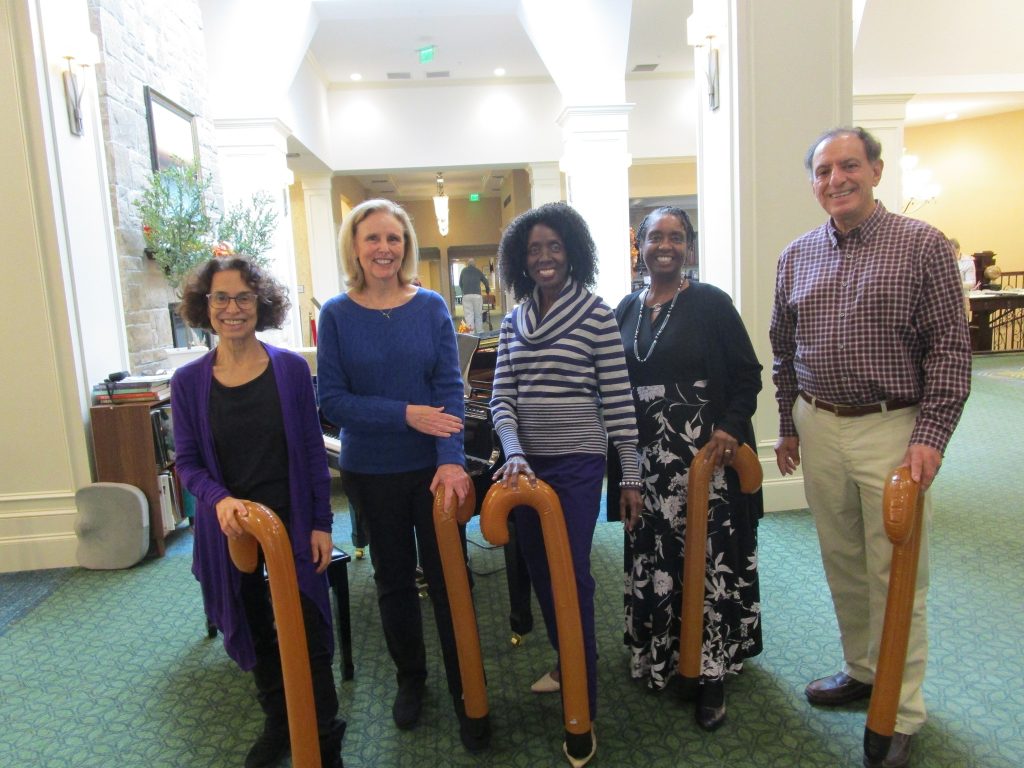
Waltonwood Retirement Community is located in Ashburn, Virginia, and for Maryland members, it is a very long, scenic drive. However, of the five participants in this recital, three were from Virginia and welcomed the much shorter commute. There were four pianists and a singalong on the program. The recital began promptly at 11:00 a.m. as 14 residents settled into cushioned chairs to listen. The room was huge with high ceilings and good acoustics so that the well-tuned Pearl River Grand piano resonated nicely.
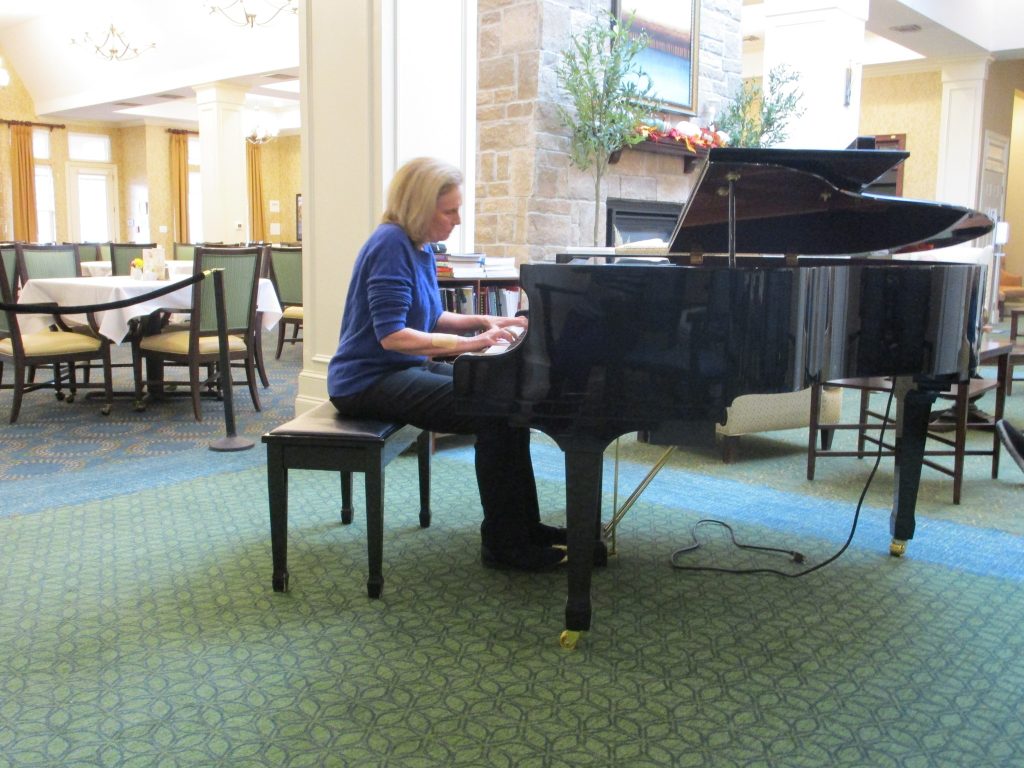
Amy Kett, our first pianist, chose to play four Preludes by Russian composer Alexander Scriabin (1872–1915) that were all written between 1888 and 1896. Amy began with Op. 16 No. 1 in B Major and followed that with Op. 11 Nos. 11 in B major, 9 in E major, and 7 in A major. Though Scriabin’s music was heavily influenced by Chopin, it speaks its own language. Playing from memory and in complete control, Amy presented all four preludes with competence, clarity, and conviction.
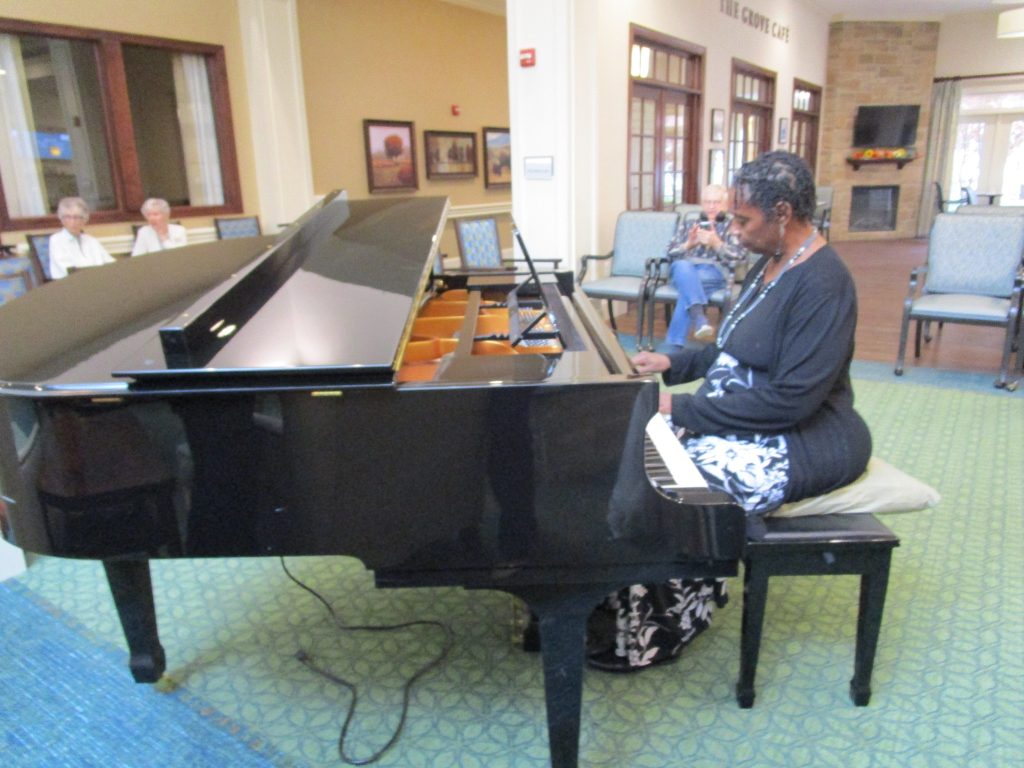
Claude Debussy (1862–1918) was a renowned French Impressionist composer who developed a highly original system of harmony and musical structure. DuEwa Kamara played the first two movements of Debussy’s Suite Bergamasque, Prelude in F major, and Menuet in A minor. The Prelude was reminiscent of gently flowing water and featured hand crossing which DuEwa competently executed without interrupting the flow. In contrast, the Menuet had a dance-like frolicking rhythm and more staccato movement. DuEwa’s light and fluid touch was well suited to both pieces which were peppered with scale runs and embellishments.
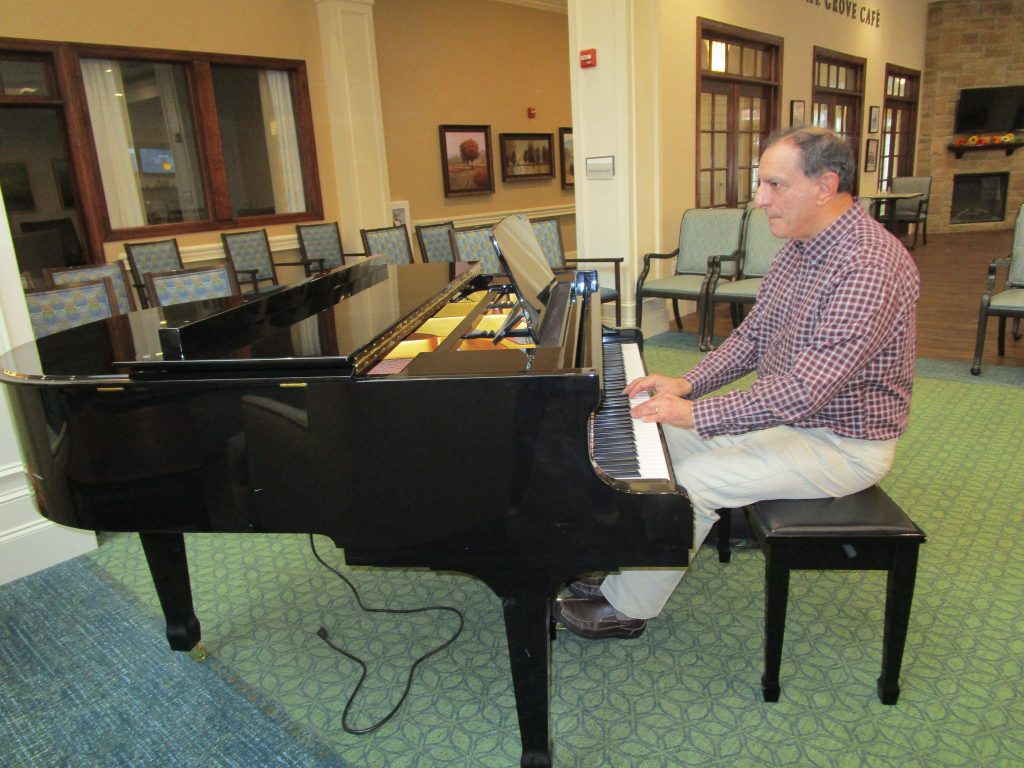
New member Eli Jacks played four pieces encompassing music across the board from the Baroque, Classical, Romantic, and Impressionist periods. They were “Jesu Joy of Man’s Desiring” by German composer J.S. Bach (1685–1750), “Moment Musical” Op. 94 No. 3 by Austrian composer Franz Schubert (1797–1828), Waltz in Ab major Op. 39 No. 15 by German composer Johannes Brahms (1833–1897), and Arabesque No. 1 by French composer Claude Debussy (1862–1918). In mastering so many styles, Eli demonstrated his musical versatility. Anchored by a solid keyboard technique, his playing was accomplished and his melodies sang throughout.
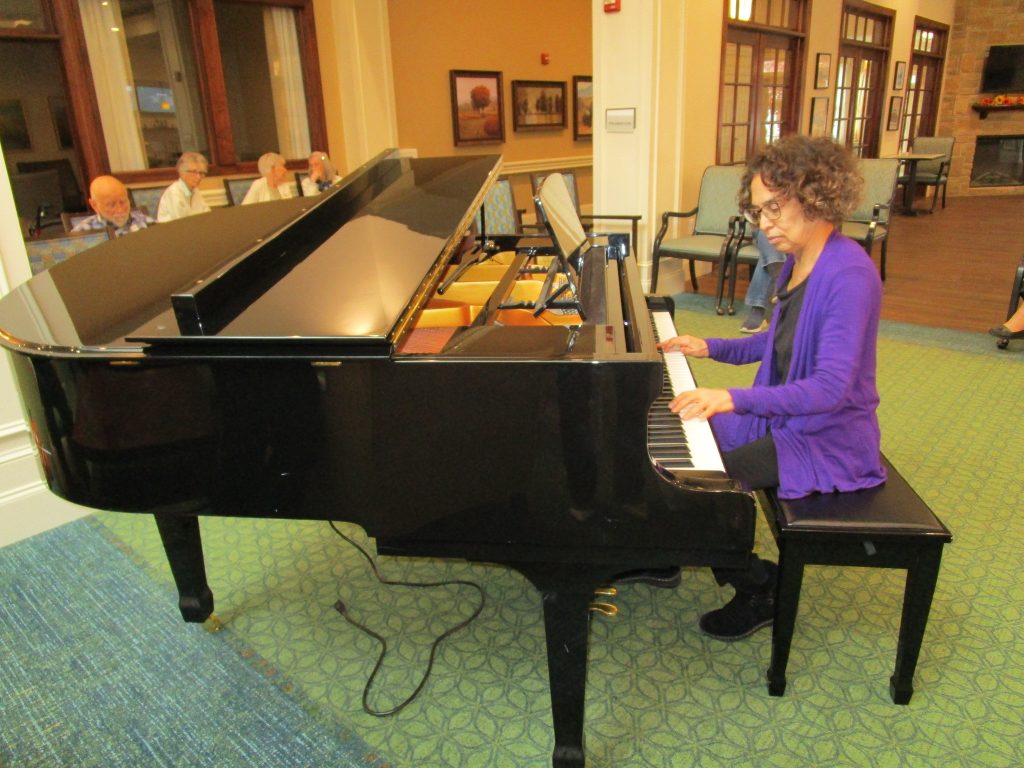
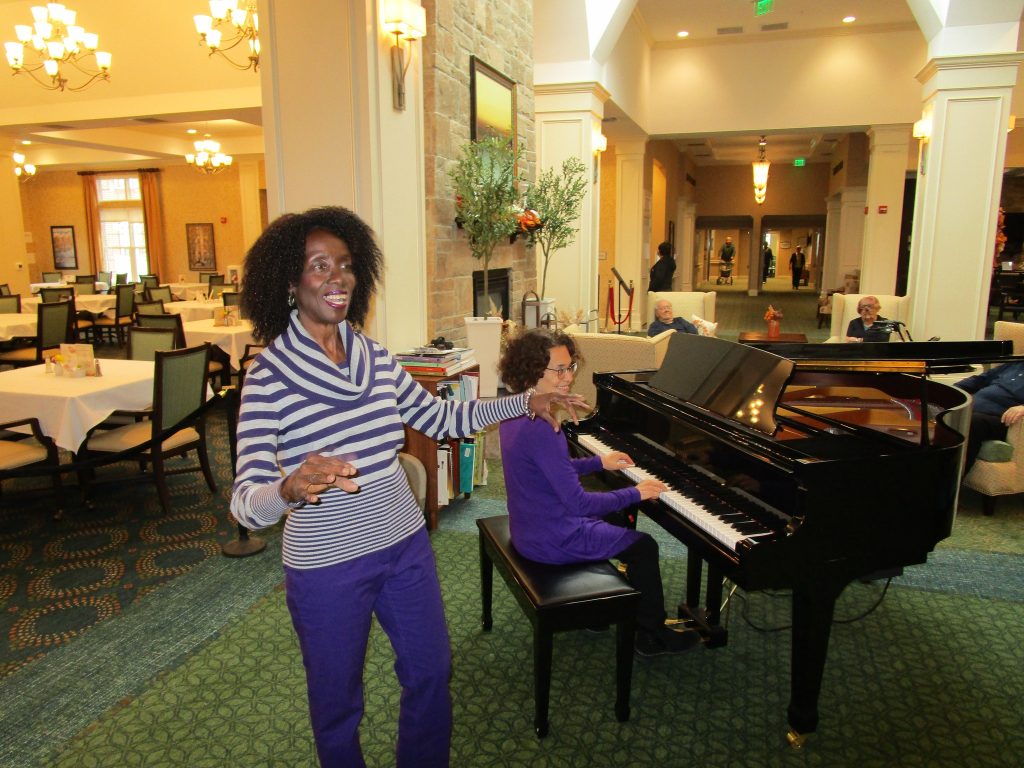
lead the sing-along
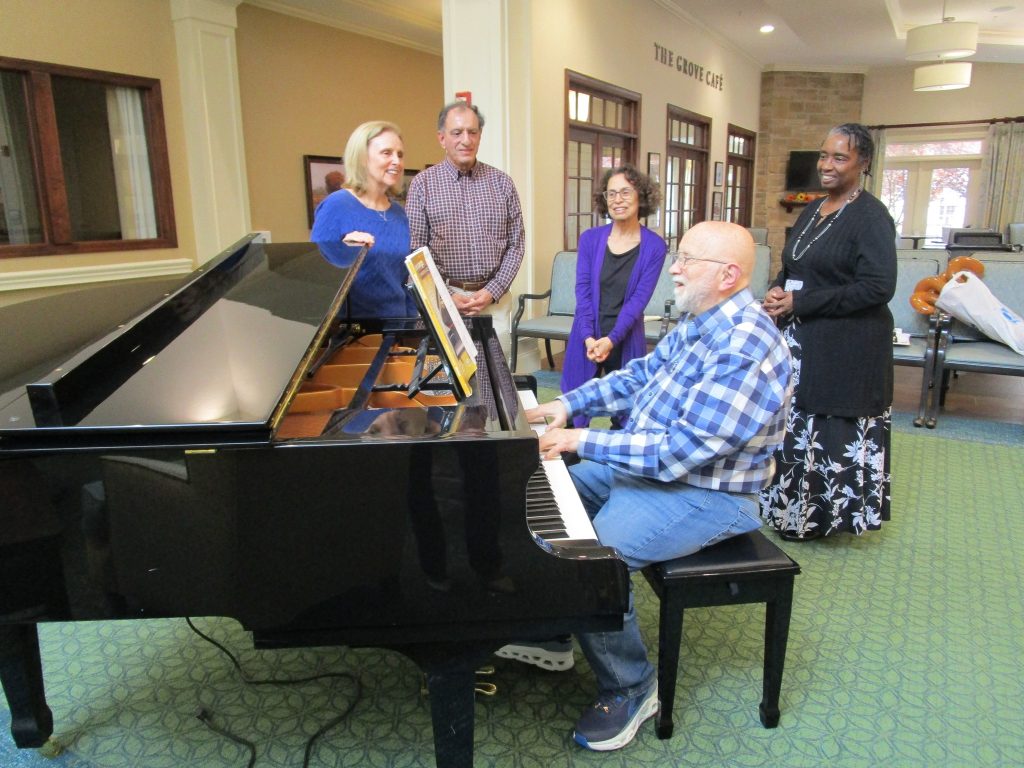
Jodi Lipson was the last pianist, and she played Nocturne in C# minor (posthumous) by Polish composer Frederic Chopin (1810–1849). The piece was used in the movie The Pianist. Jewish pianist and Holocaust survivor, Wladyslaw Szpilman actually played this nocturne during the last live broadcast of Polish radio as Warsaw was being besieged by German forces in 1939. It is a sad and poignant piece. Jodi poured her heart into the music and successfully conveyed the nostalgic mood.
Jodi remained at the piano to accompany the final seasonal singalong of two Christmas Carols. They were “Silent Night” with words by Austrian priest Joseph Mohr in 1816 and music by Franz Xaver Gruber in 1818; and “O Come All Ye Faithful” or “Adeste Fidelis” by John Francis Wade (1711–1786). Words were distributed to the 14 residents, and Carol Henry led the singing. The Carols were so well known that it was great to hear some of the male residents harmonize with tenor and bass parts.
It is rare that roles are flipped and the residents entertain the performers. After this recital, resident Jimmy Bloom entertained us on the piano with two delightful pieces called “Always” by American composer Irving Berlin (1888–1989) and “Carolina Moon” by American songwriter Benny Davis (1895–1979). Jimmy skillfully improvised the left hand throughout as we sang along. Though his fingers were arthritic and he does not play much anymore, he was impressive. Jimmy’s musical renditions provided a fitting ending to an enjoyable recital. He says that he would have considered joining the AMSF but unfortunately, he no longer drives. However, he was thrilled to know that his photo would appear in the AMSF newsletter!