
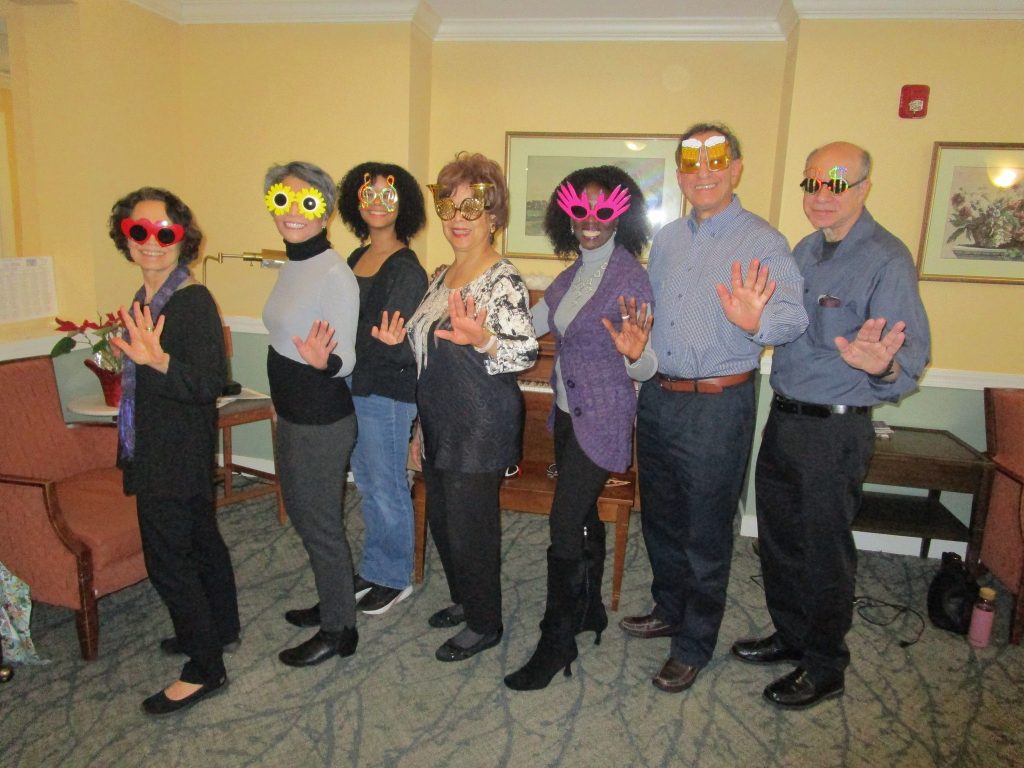
Snow showers on the morning of Saturday, January 17th, threatened to dampen our day. However, by noon, the weather cooperated and changed to light rain. The seven participants arrived at Byron House by 3:15 p.m., and the recital began at 3:30 p.m. as planned. There were five pianists, a violinist, and a singalong on the program, and 12 residents were already seated near the upright Yamaha piano.
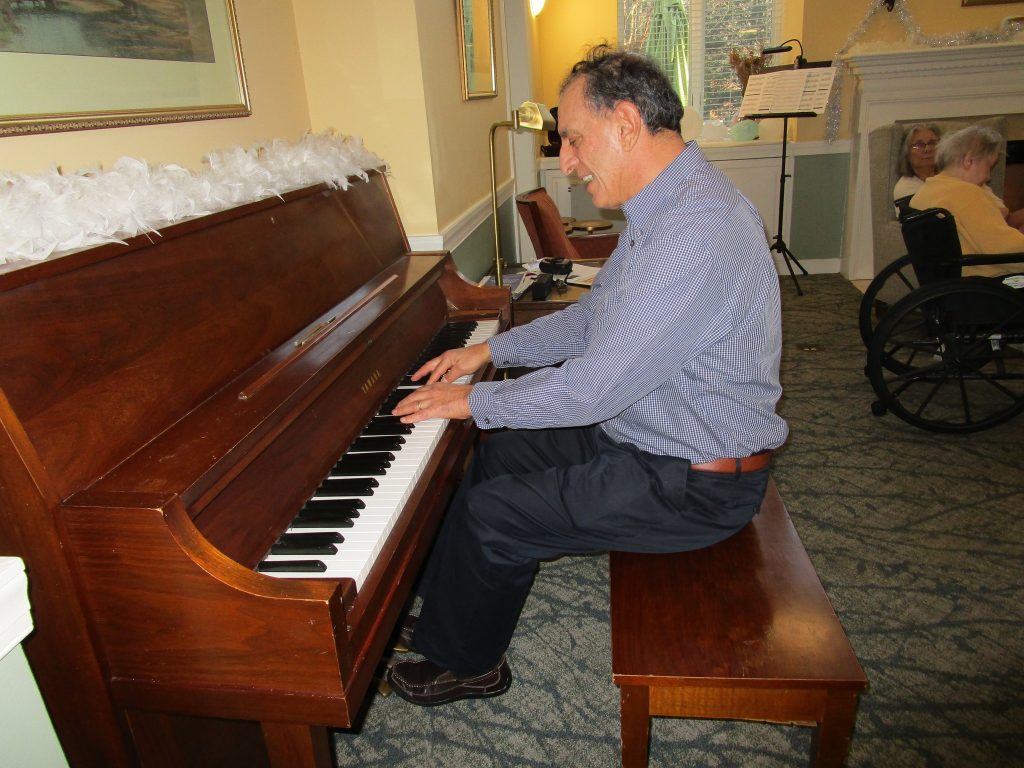
Pianist Eli Jacks was the first to perform. He played a Prelude Op. 28 No. 15 and a Mazurka Op. 59 No. 1 both by Polish composer Frederic Chopin (1810–1849). Also known as the “Raindrop” Prelude, Eli’s first piece was beautifully executed, and one could feel the gentle tap of the raindrops as he played. His second piece was written in 1845 and is one of 56 Mazurkas that Chopin composed. A Mazurka is a lively Polish folk dance in triple meter characterized by strong accents on the second or third beat and Eli’s graceful playing reflected this.
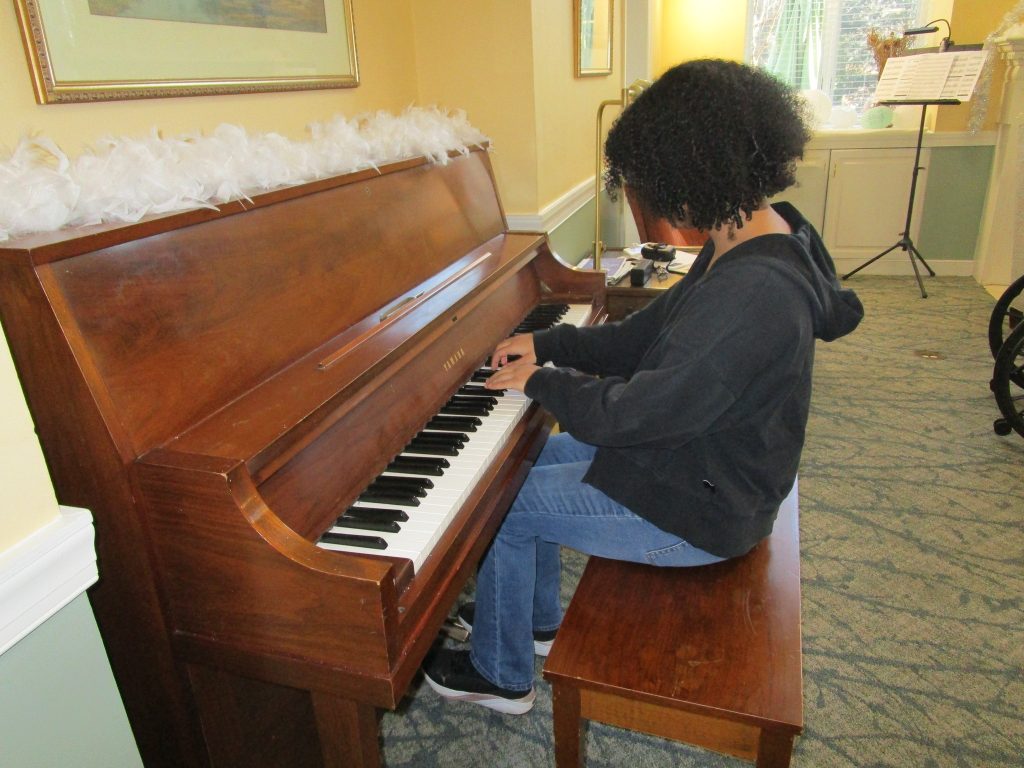
Eli was followed by our youngest AMSF member, Joelle Harris, who was making her debut performance. She played “Claire de Lune” by French composer Claude Debussy (1862–1918). Despite the bright tone of the Yamaha piano, Joelle was able to capture the serenity of the piece with her sensitive and unhurried performance. Her fingers rippled over the keys as she played the broken chords characteristic of Debussy, and it is a testament to Joelle’s skill that the entire piece was memorized.
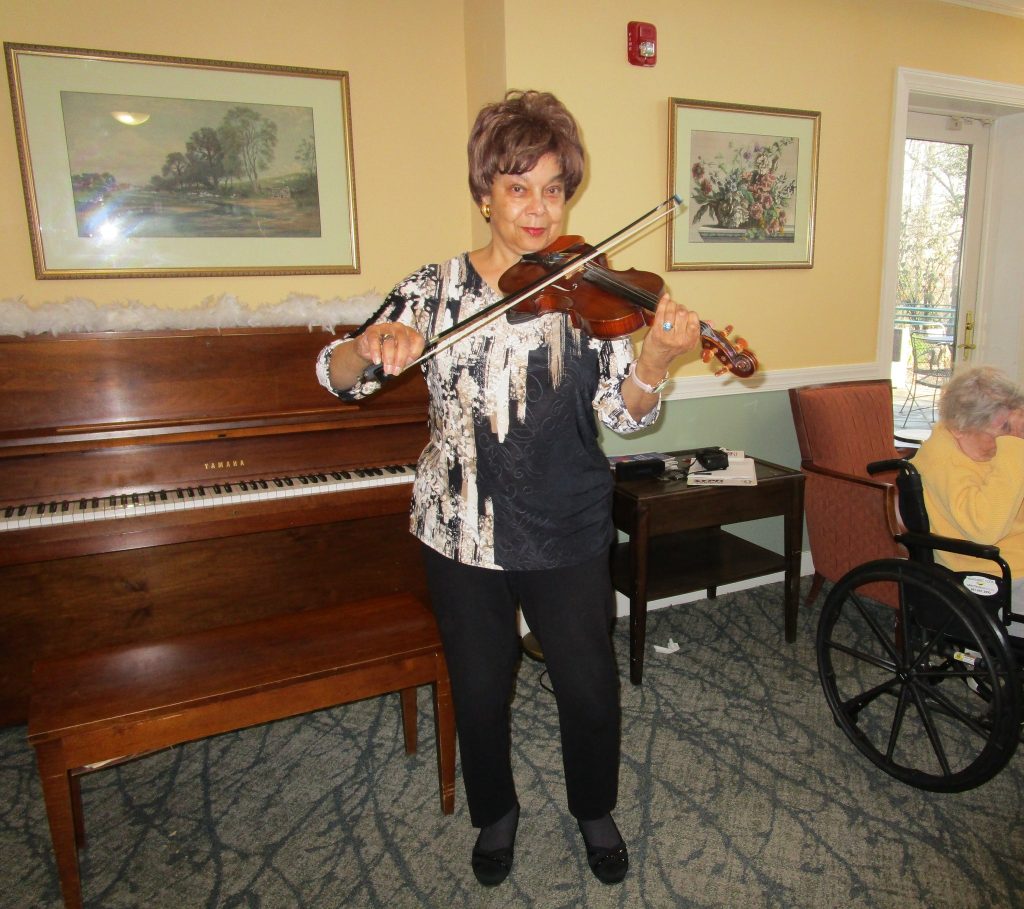
Violinist Stephanie Dailey was next. She chose “Hornpipe” from the Water Music Suite by German Baroque composer George Frederic Handel (1685–1759); Eine Kleine Nacht Musik by Austrian composer Wolfgang Amadeus Mozart (1756–1791); and “In the Hall of the Mountain King” by Norwegian composer Edvard Grieg (1843–1907), in which Stephanie’s pizzicato prowess was on full display. Accompanied by her Bluetooth speaker, Stephanie roused the audience with these three lively pieces which generated a lot of foot-tapping as the residents showed their enjoyment of the familiar music.
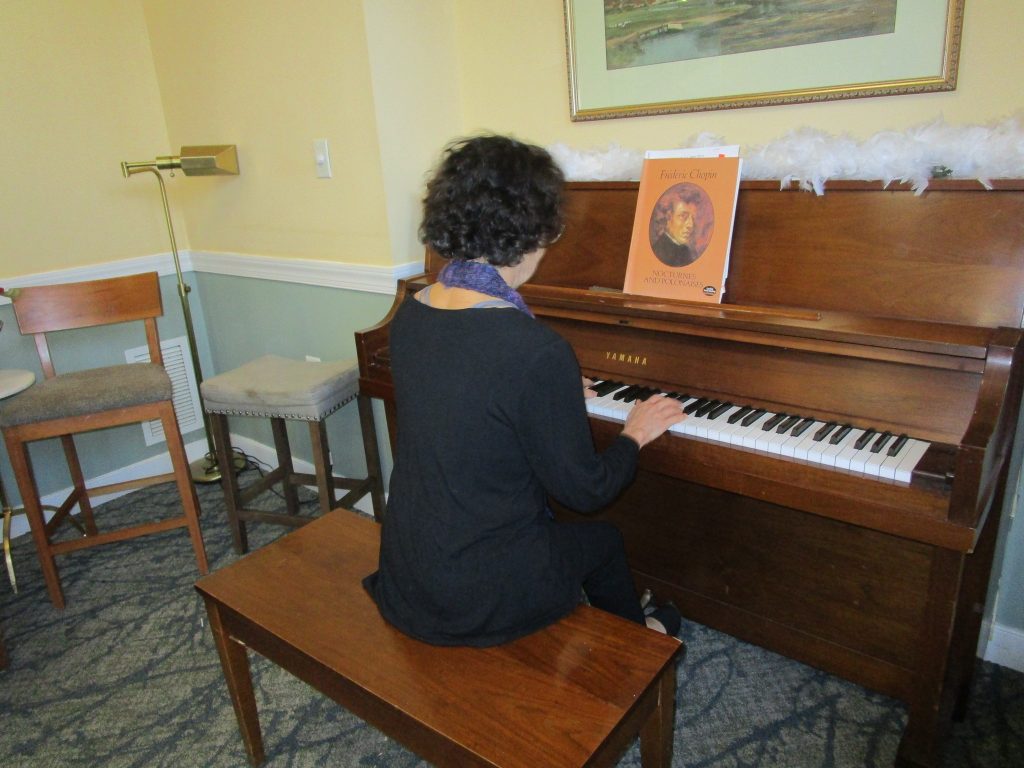
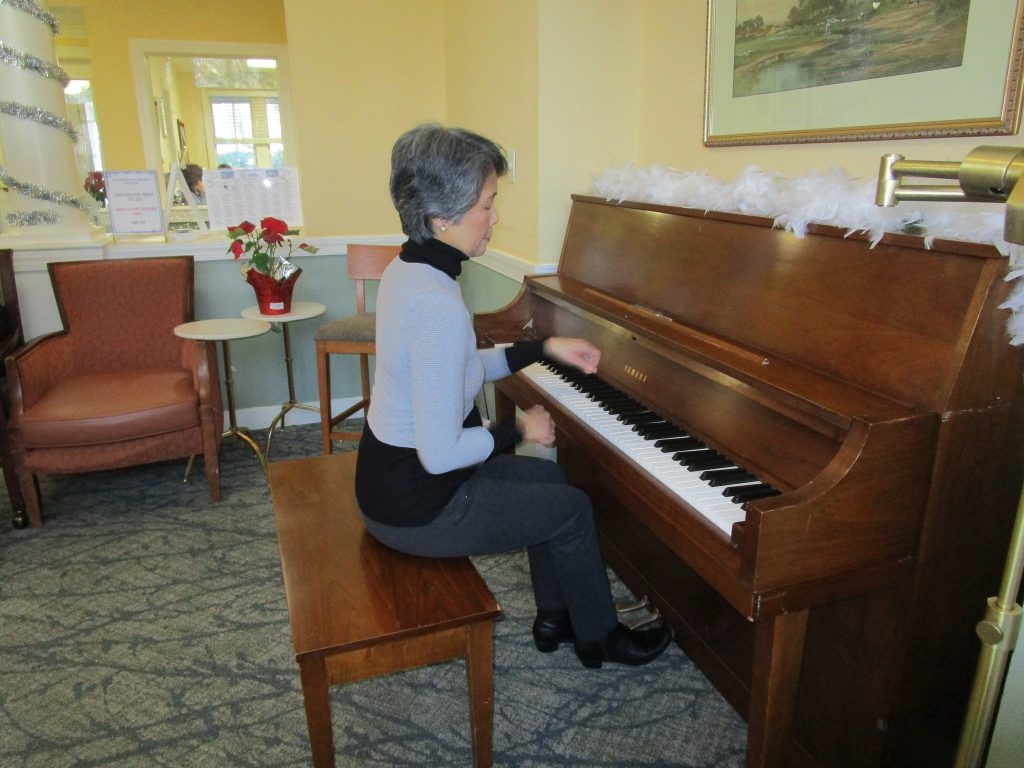
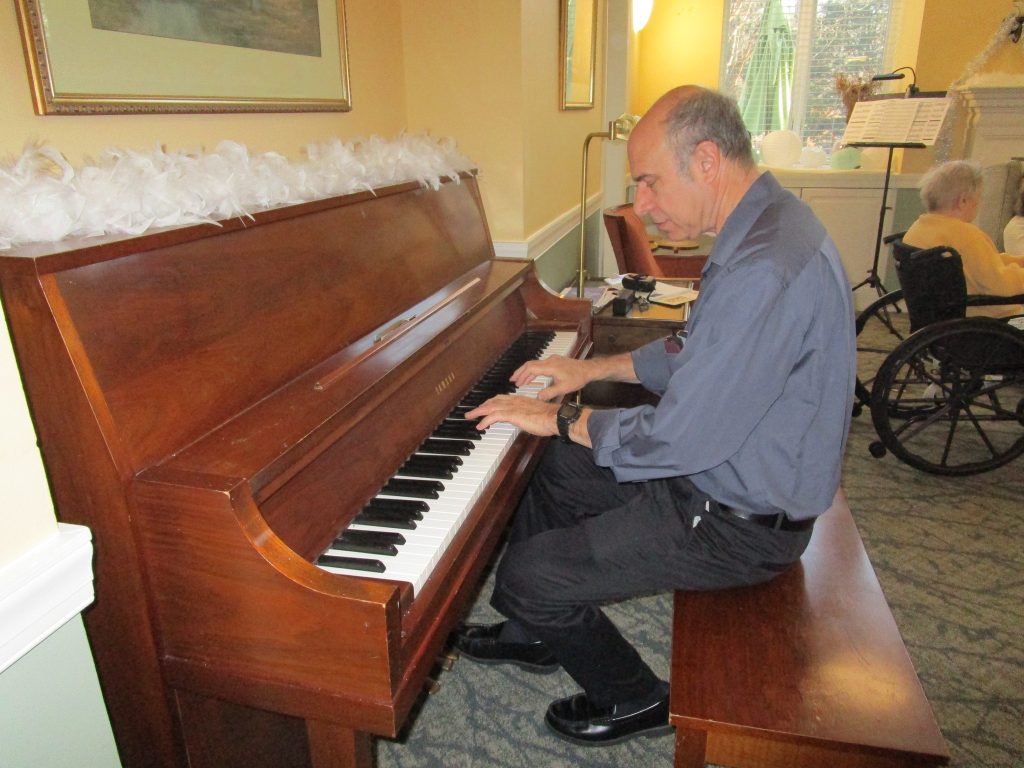
Jodi Lipson was the second pianist to play Chopin. She chose his nostalgic Nocturne No. 20 in C# minor (posthumous). Chopin wrote the piece for his sister Ludwika, around 1830. It became famous because, played by Wladyslaw Szpilman, it was the last piece of music broadcast on Polish radio when the Nazis invaded Warsaw in 1939 during World War II. The piece was also prominently featured in Roman Polanski’s film The Pianist that is based on Szpilman’s life. Jodi’s reflective and controlled playing injected just the right amount of pathos into this melancholic piece. Her decrescendo to pianissimo in the Adagio section was particularly noteworthy.
Michelle Powell followed with two contrasting pieces. They were “Somewhere” from West Side Story by American composer Leonard Bernstein (1918–1990) and “Ritual Fire Dance” by Spanish composer Manuel de Falla (1876–1946). As Michelle played her first piece, the residents could be heard humming along to the famous melody. Her second selection lived up to its name as it certainly was “fiery” with loud voluptuous repeated chords and fast alternating 2-note half-tones that added drama to the piece. Michelle mastered the technical difficulty with conviction and delivered an energetic performance that drew resounding applause.
Gregory Riviello was the last pianist, and he played “Sheep May Safely Graze” from the “Birthday Cantata” by German composer Johann Sebastian Bach (1685–1750), and Nocturne in Eb major Op. 9 No. 2 by Chopin. “Nocturne” means music for the night, and Chopin wrote 21 of them. Because of his excellent keyboard technique and posture, Gregory succeeded in highlighting the lovely singing melody of the Bach piece, which is a soprano aria written in 1713. Gregory’s lyrical presentation of the Chopin Nocturne was also well received. It is one of Chopin’s most beloved compositions written around 1830 when he was just 20 years old.
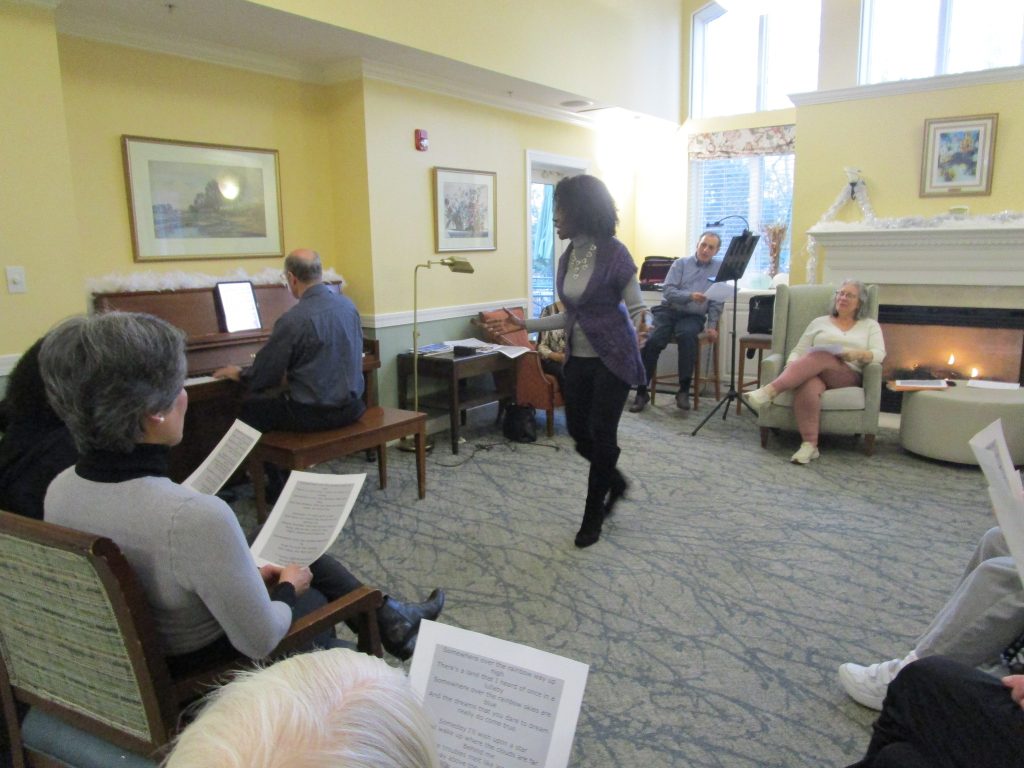
The recital ended with a singalong of “Somewhere Over the Rainbow” led by Carol Henry accompanied on the piano by Gregory Riviello. The song was written in 1939 by Harold Arlen (music) and Yip Harburg (lyrics) for the film The Wizard of Oz, in which it was sung by Judy Garland. Joelle distributed the printed words to the residents who sang this well-known song with smiles on their faces. Often the singalongs are the highlight of the afternoon for the residents as it allows them the privilege of participation, so much so that they were willing to sing it a second time!