
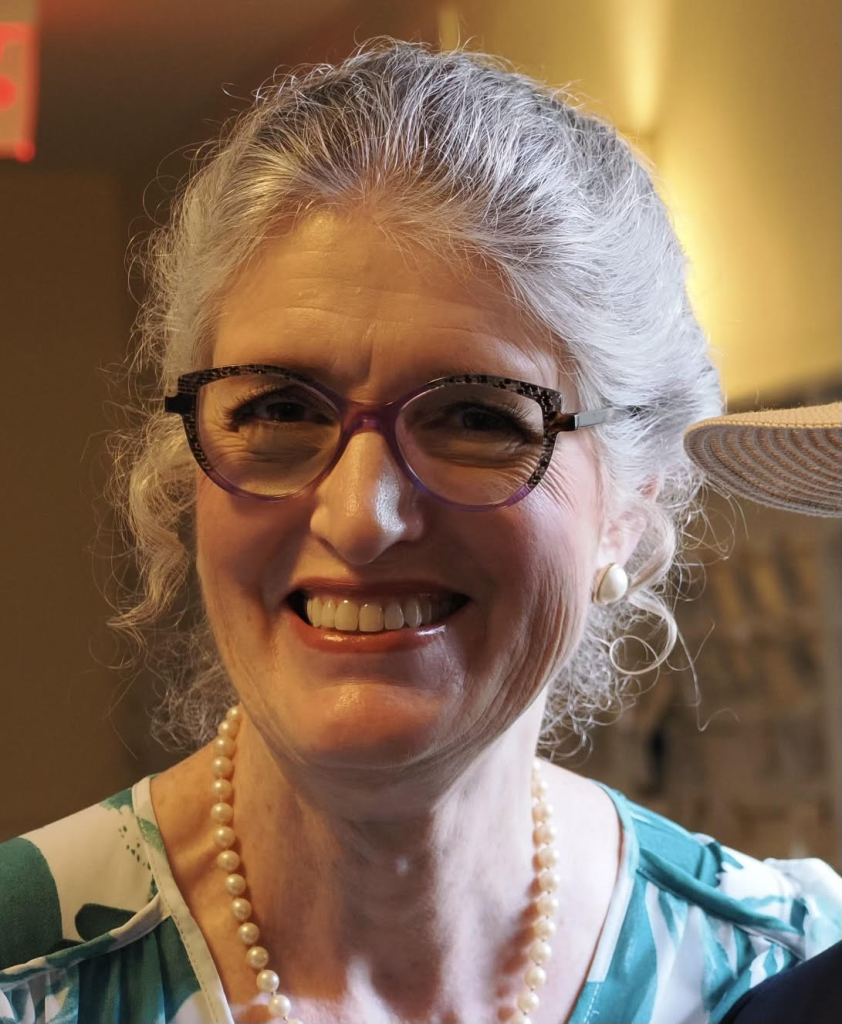
I began piano at age 4. My teacher was an Eastman graduate, as she often reminded me, who gave me a solid foundation. I took lessons until my father passed away when I was 11.
I wanted to play piano in the junior high orchestra. The teacher took one look at my height and my hands and told me I could be a bass player. I didn’t know what a bass was, but as there were no pianos in the orchestra, I signed up. Thanks to all those years of piano, I learned quickly. No problem reading the music — just one note at a time! By 8th grade, I sat first chair at school, in the All-City Orchestra, and at summer music camp. How I loved camp! I sold chocolate bars door-to-door to earn my way to camp each summer. (To this day I will buy ANYTHING a band/orchestra/choir kid is selling.) In high school, I was principal bass at school, and in the All-City, All-Southern California, All-State California, and All Western United States orchestras.
I didn’t have my own instrument. I borrowed from school. I never had lessons; I was the self-taught product of a very good school music program. After high school, I borrowed a bass from my local community college. Having stopped playing the piano for love of the bass, I came home one day to discover the piano had been sold.
I was married at 20 (that was 52 years ago, and I still like him) and moved to Princeton, where my husband was a graduate student. I assumed the music part of my life was over. The bass was something I had done during my school years. I missed it terribly. A year went by. And then one day I was walking through graduate student housing, and I heard someone playing the violin. I knocked on the door and burst into tears while telling a surprised young woman that I used to play the bass. I asked if non-students ever played with the university orchestra and if they had an instrument I could borrow? She answered, “Yes” and “Maybe,” respectively. I showed up.
Princeton did have instruments, but not for non-students. The conductor knew someone with a bass for sale and arranged for me to meet him. I came with my Simandl book in hand (the classic beginner bass Bible) and played a few excerpts for a nice older man. He mentioned he would like to teach me, which I dismissed as it meant traveling from Princeton to Queens — too far. I bought the bass for $1,000, leaving us newlyweds with $80 in the bank and no regrets. Upon returning to the university orchestra, the conductor asked how it went, and I reported it went great — that I bought the instrument, and that the man who sold it to me offered me lessons. His jaw dropped. Did I know who he was? Sam Levitan, former principal bass of the NBC Symphony under Arturo Toscanini, who had only ever taught two other students. “He doesn’t teach. If he offered you lessons, you MUST take them.” And so finally, at age 21, I had my first private bass lesson. I subsequently studied with Roger Scott, principal bass of the Philadelphia Orchestra, and Tom Lederer, co-principal bass Dallas Symphony. I played with many orchestras but was particularly blessed to play with the Fort Worth Symphony, including for the 9th Cliburn Piano Competition, with Dallas Opera, and as a sub with Dallas Symphony during my Texas years. After moving back to New Jersey I served as adjunct double bass faculty for ten years at Princeton University.
Music meant everything to me as a child. It earned me the respect of teachers and peers. The orchestra and band kids were my friend group — a good group to run with. Through all the awkwardness and insecurities of growing up, music was my thing, the source of my self-esteem and my identity. Playing in an orchestra meant being part of something bigger than myself. It felt transcendent. I’ll never forget playing my first Carmina Burana at the Dorothy Chandler Pavilion in Los Angeles — televised — with the All-Southern California High School Orchestra and Chorus. Such joy! What followed was 40 years of wonderful, soul-feeding moments, until a shoulder injury slowly but surely brought my orchestral life to an end.
But, even as that door closed, a window opened, and I found a new passion. Sue Ellen Page, Director of Choirs for Children and Youth at Nassau Presbyterian Church in Princeton, NJ, asked if I would volunteer with the Trenton Children’s Chorus (TCC). My job would be to manage everything BUT the music, furthering the mission of providing traditional choral music education for children who might not otherwise have that opportunity. I knew, first-hand, the power of music to change lives. I was fortunate to grow up in a school district that promoted music education, to move up through extracurricular orchestras, and to attend summer music camp. Those experiences should be available to every child, not just to those who win the demographic lottery. Helping a few hours a week would be a way to give back. It turned out to be a lot more than a few hours a week. It became the center of my life for the next twenty years.
Trenton Children’s Chorus addressed the consequences of racism one child at a time. It was a targeted effort to level the playing field and open the doors of possibility. In a city with limited school music, where instruments and private lessons were out of reach for most, TCC offered access to opportunity through choral music education, because every child can learn to make a beautiful sound with their voice.
When I came on board in 1997, the Chorus was very small — just 30 children in grades 3–8 — that met weekly after school for help with homework, a healthy snack, music theory, choir rehearsal, and to perform spring and winter concerts for their families. The annual budget was $3,000. I fell in love with the kids, threw myself into the work, and TCC began to grow. TCC’s middle school choir combined with the same-age Nassau Church youth choir on Sunday evenings to sing more advanced literature and to take a short trip together each year. Friendships formed between children from diverse backgrounds. They performed a commissioned work, Hold Fast to Dreams, based on the poetry of Langston Hughes, composed by and performed with Dave Brubeck and the Dave Brubeck Quartet. They performed with Bobby McFerrin, sang at the National Cathedral, for the Obama’s at the White House, and at the United Nations, as well as at community and corporate events. For any child, anywhere, this is absolutely life-changing stuff. Children stand taller from experiences like these. They see themselves differently. That’s how it was for me, and now for them.
An entirely volunteer run organization is not sustainable. I wrote grants and began fundraising in earnest. The Chorus transitioned from a program of the church to a 501(c)3 consisting of four choirs, music theory, drumming, and a Learning Academy (intensive academic assistance), taught by a fully professional, paid staff. When I retired in 2019, the program served 150 children and had an annual budget of $500,000. Today, nearly 40 years since its founding, Trenton Children’s Chorus is one of three creative youth-development programs of Capital Harmony Works.
After a 60-year break, I returned to the piano and lessons two years ago. I am so grateful to once again have music in my life. If my shoulder had not been injured, I would still be playing the bass, and if I’d been playing the bass all these years, the Trenton Children’s Chorus would not have been part of my life. But because I played the bass and the piano, I understood the power of music in the life of a child, and by the grace of God, was able to pass that gift along.
If you have the capacity to give in some way what you have received to the next generation, do it. You will be giving the gift of beauty. You will change a life, and that change will ripple out. You never know, nor can you even imagine, all the good you can do.
“Singing sometimes makes me feel like I can fly away.” ~ 10th grade student