
It was a beautiful Saturday afternoon on August 16th when seven AMSF members arrived at Chevy Chase House in DC to perform for the residents. There were three pianists, a violinist, a flute/classical guitar duet, and a singalong on the program. As the pianists warmed up on the Baldwin Grand piano, 24 residents trickled in — some in wheelchairs. The recital began promptly at 4:00 p.m. with violinist Stephanie Dailey.

Accompanied by her Bluetooth speaker, Stephanie played three well-known songs by American composer and conductor Henry Mancini (1924–1994). They were “Baby Elephant Walk” composed in 1961 for the film Hatari!, “Charade” composed for the 1963 comedy, and “Theme from The Pink Panther” which is from the 1963 movie. Stephanie gave an entertaining introduction to her pieces and even tested the knowledge of the residents with a few questions which they answered correctly. As she played the pieces, the residents showed their appreciation by swaying, clapping, and tapping their feet to the upbeat music.
Pianist Alberto Gamez followed with Prelude in Db major Op. 28 No.15 (also known as the “Raindrop” prelude) by Frederic Chopin (1810–1849). Alberto made the melody sing sweetly above the repeated A-flats in the left hand which represented the gentle patter of raindrops throughout the piece. His playing was very musical, and he drew warm applause.
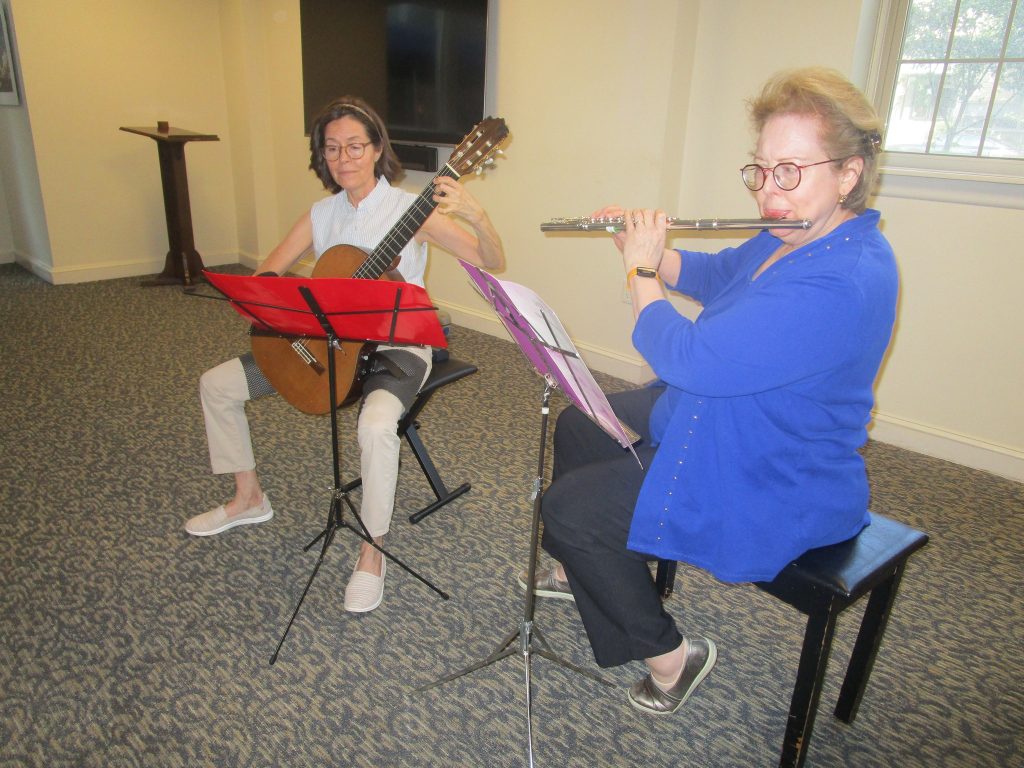
Duettists Ellen Lazarus and Mary Lewers performed next. Ellen played classical guitar while Mary played the flute. Their first piece was a traditional Mexican song with a lilting melody in 4/4 time called “Mi Linda Mariquita” (my pretty little girl) arranged by Yvon Rivoal (b.1944). Their second piece was Gymnopedie No. 1 by French composer and pianist Erik Satie (1866–1925). Satie was quite a rebel in his day. He grew up in the Romantic Period (1830–1920) and rebelled against all the rules. He originally wrote the piece in 1888 for the piano and he invited the listener to “get lost in the atmosphere of the music.” Ellen and Mary blended well musically and brought out the contrast between the two pieces. As they ended, the residents applauded appreciatively.
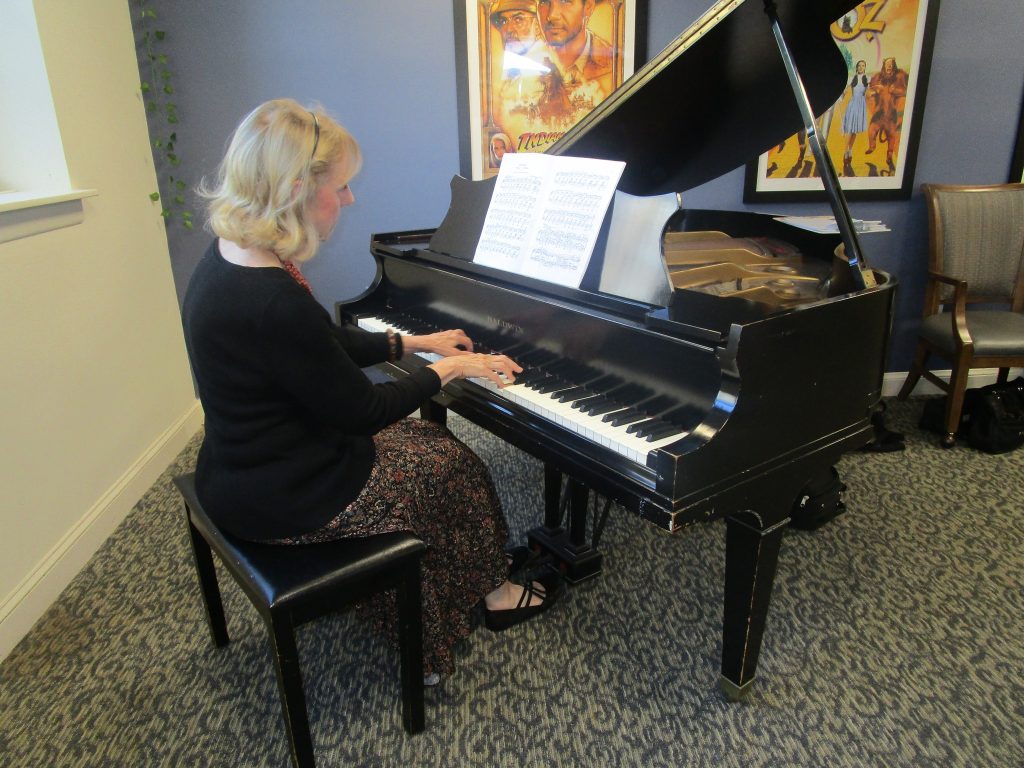
The second pianist of the afternoon was Sondra Mills who played Arabesque Op. 18 by German composer Robert Schumann (1810–1856). Schumann studied piano in Leipzig, Germany, with Friedrich Wieck. He fell in love with Wieck’s daughter Clara, but Wieck bitterly opposed the union. Despite his opposition, they married anyway and had seven children. Schumann composed Arabesque for his students when he briefly lived in Vienna in 1838. Sondra’s honed musical sense was on full display as she varied her touch to meet the changing demands of this gorgeous piece. She kept the audience engaged from beginning to end and was warmly applauded.

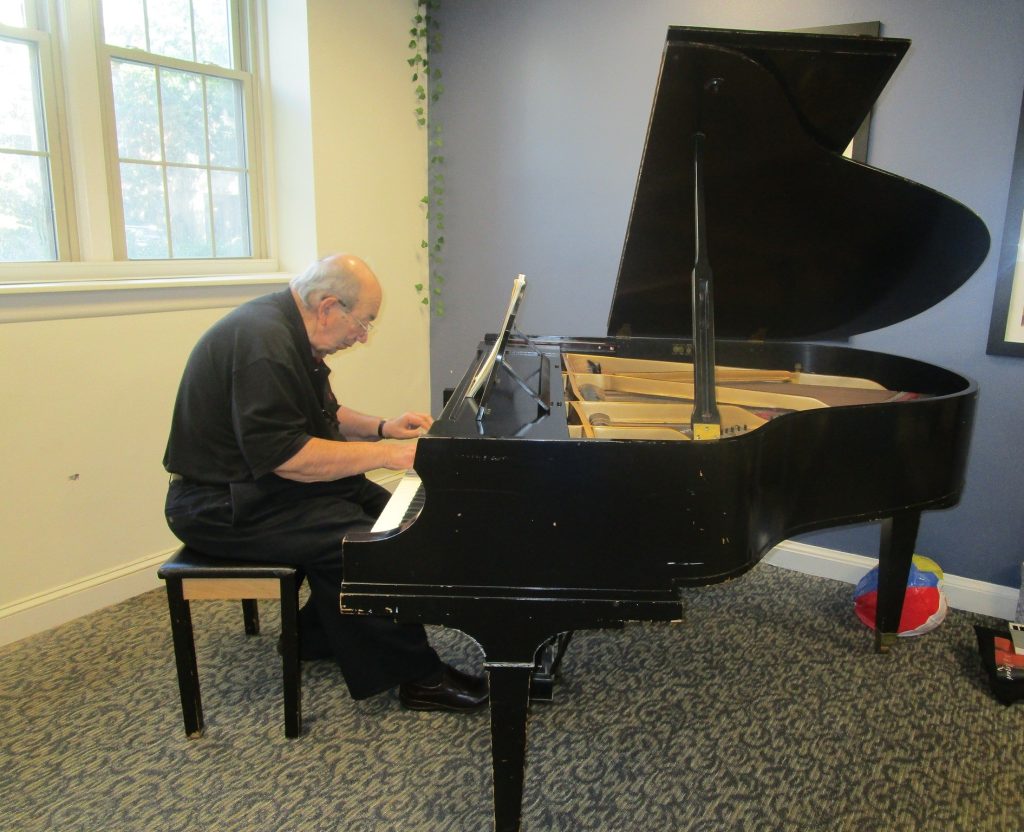
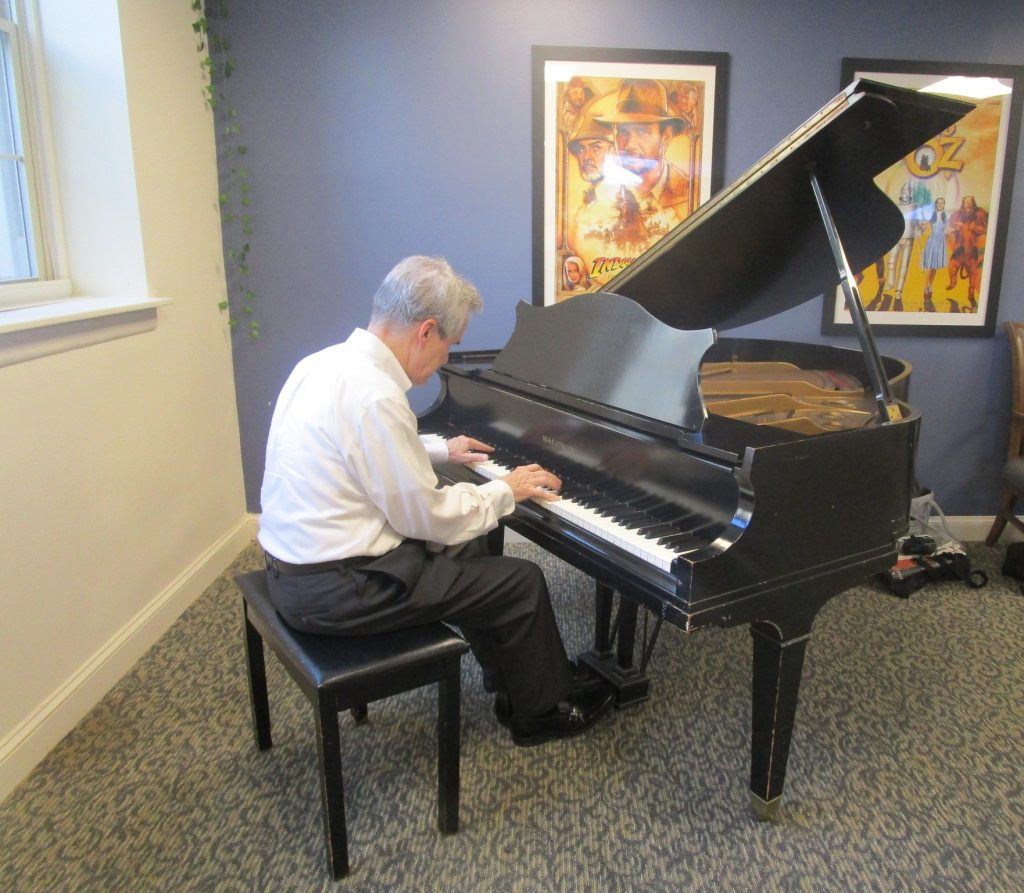
Richard Zierdt was the last pianist, and he played Chopin’s Ballade No. 4 in F minor Op. 52, which was composed in 1842 and dedicated to Baroness Charlotte de Rothschild. This Ballade was inspired by Adam Mickiewicz’ poem “The Three Budrys.” Considered to be the most difficult of the four ballades, it was a dramatic and challenging piece. It began calmly with a beautiful lyrical melody which Richard expressed with a sensitive touch. As the piece progressed, however, it gradually crescendoed into loud frenzied passages that required tremendous dexterity. With impressive control, Richard mastered the massive chords at the blistering tempo and brought the piece safely home to end with the same gentle touch as at the beginning. He rose from the piano to resounding applause.
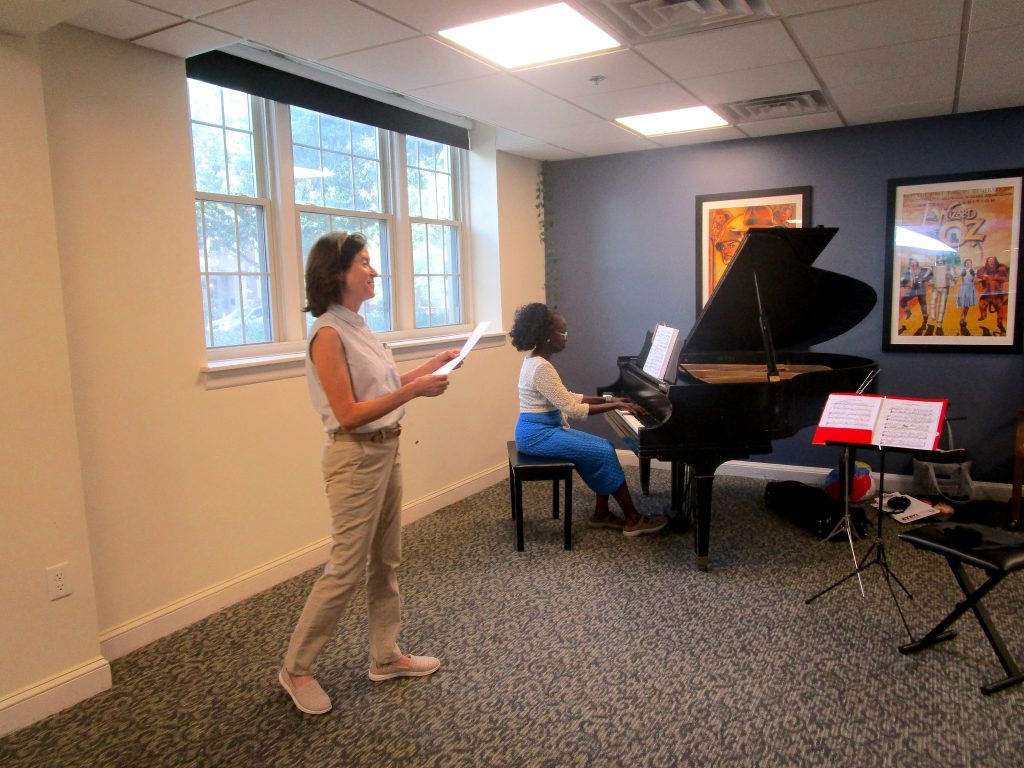
To end the recital, the residents readily participated in a singalong of the familiar Irish Folk song “O Danny Boy” led by Ellen Lazarus accompanied by Carol Henry on the piano. Sondra and Mary distributed the printed words which were written by English lawyer Frederic Weatherly in 1910. The residents particularly liked this song and most of them already knew the words to the first two verses, so they sang out beautifully as Ellen led in her warm alto voice.
After the recital, as we were taking our group photo, several residents approached the performers to thank them for the delightful music. One lady named Bonnie Boekeloo, said that she was particularly touched by Richard Zierdt’s Chopin ballade because, as a pianist herself, she had played the piece in her youth. It is always refreshing and encouraging for the performers to receive this kind of positive feedback.