
Raphael House is a smaller venue, and at our recital on October 19th, there were 15 residents present. Performers included five pianists, a violinist, a flute/horn duo, and a vocalist. After a brief introduction about the AMSF, the recital began at 3:30 p.m. with pianist Alberto Gamez.
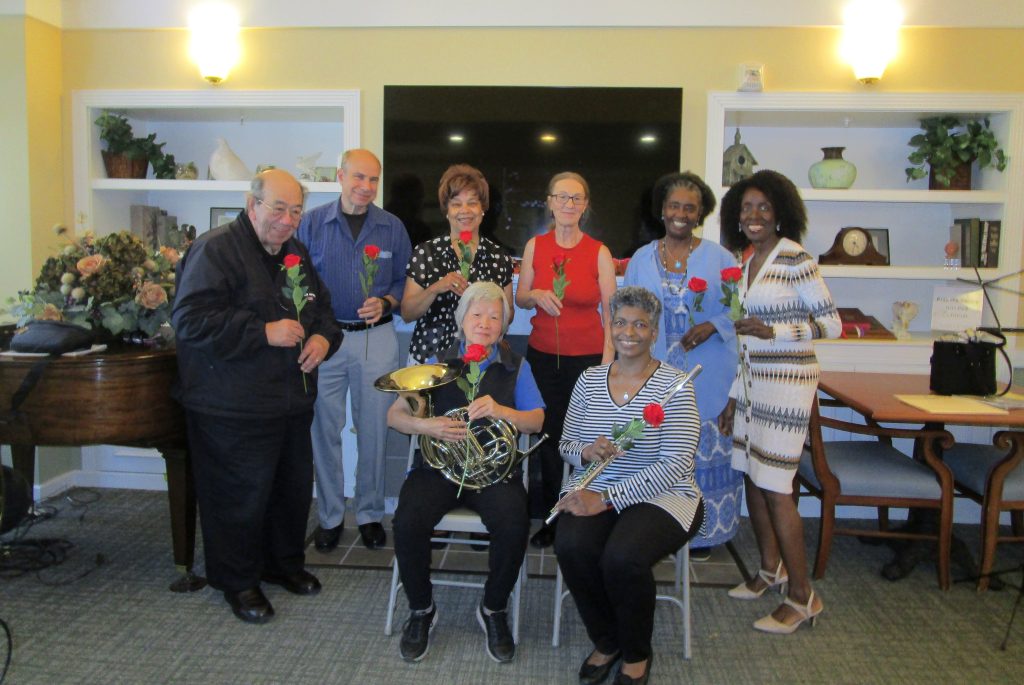
Seated: Kit Chan and Sharon Atteh-Chi
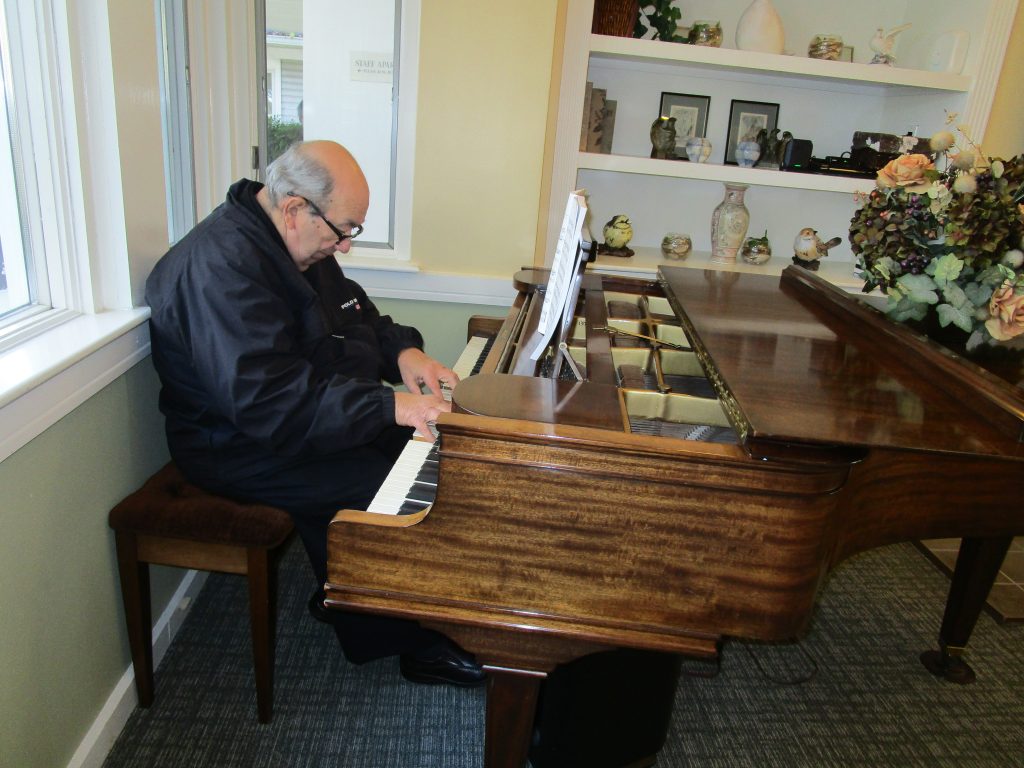
Alberto played Sonatina in G major by Ludwig Van Beethoven (1770 – 1827). A Sonatina is a mini-Sonata. Like the Sonata, it is divided into Exposition, Development, and Recapitulation where the main theme returns to end. In this piece, Beethoven took the liberty of adding a coda utilizing an eighth-note Alberti bass typical of the period. Alberto handled the piece with his characteristic dexterity and skill.
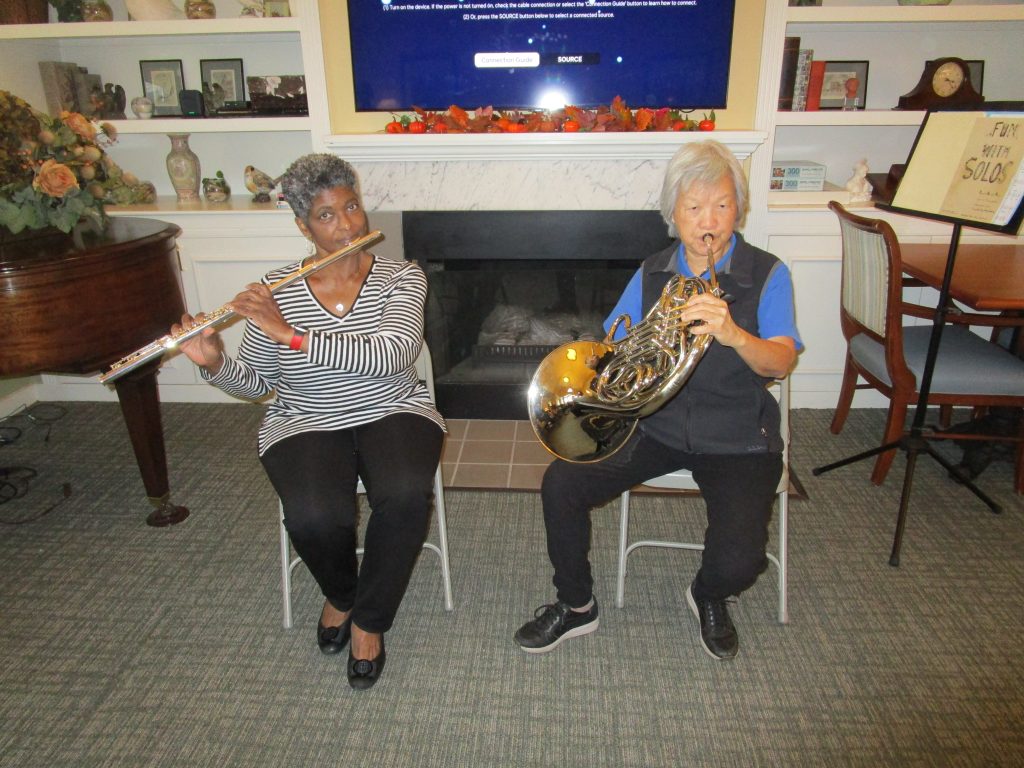
French Horn and flute are strange bedfellows, but Kit Chan and Sharon Atteh-Chi succeeded in beautifully blending the two timbres of brass and woodwind instruments as they played Fuga in G KV443 by Wolfgang Amadeus Mozart (1756 – 1791). A fugue has a main theme or subject that is repeated and imitated by different voices. Interestingly, the piece was originally written for string trio.
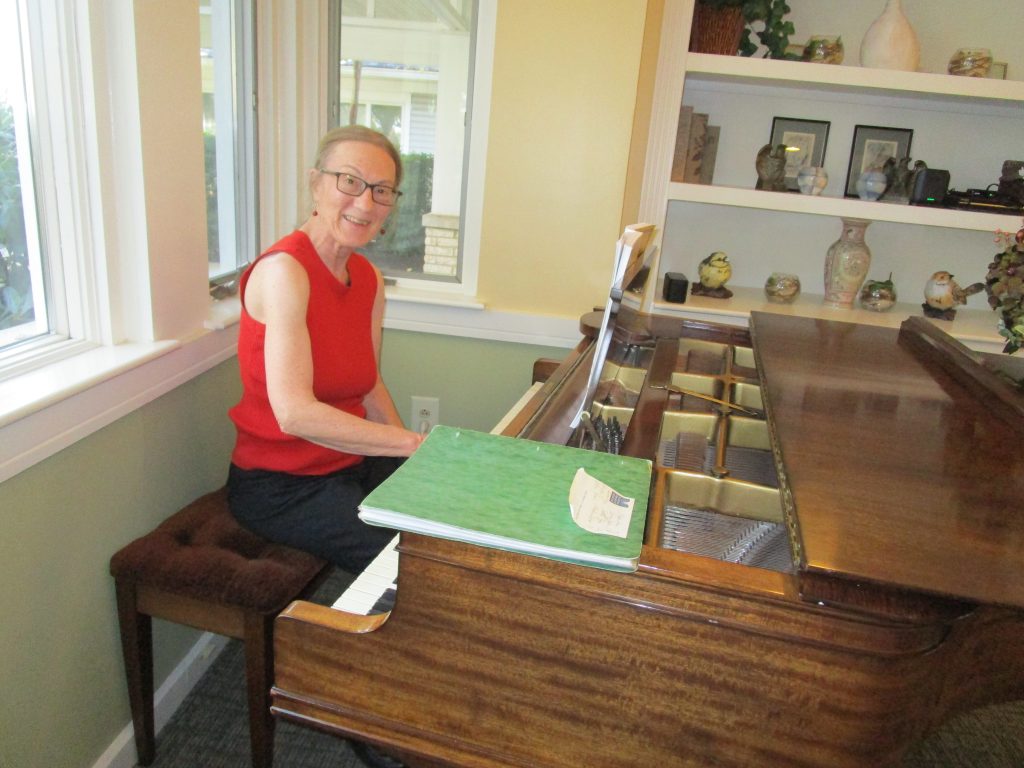
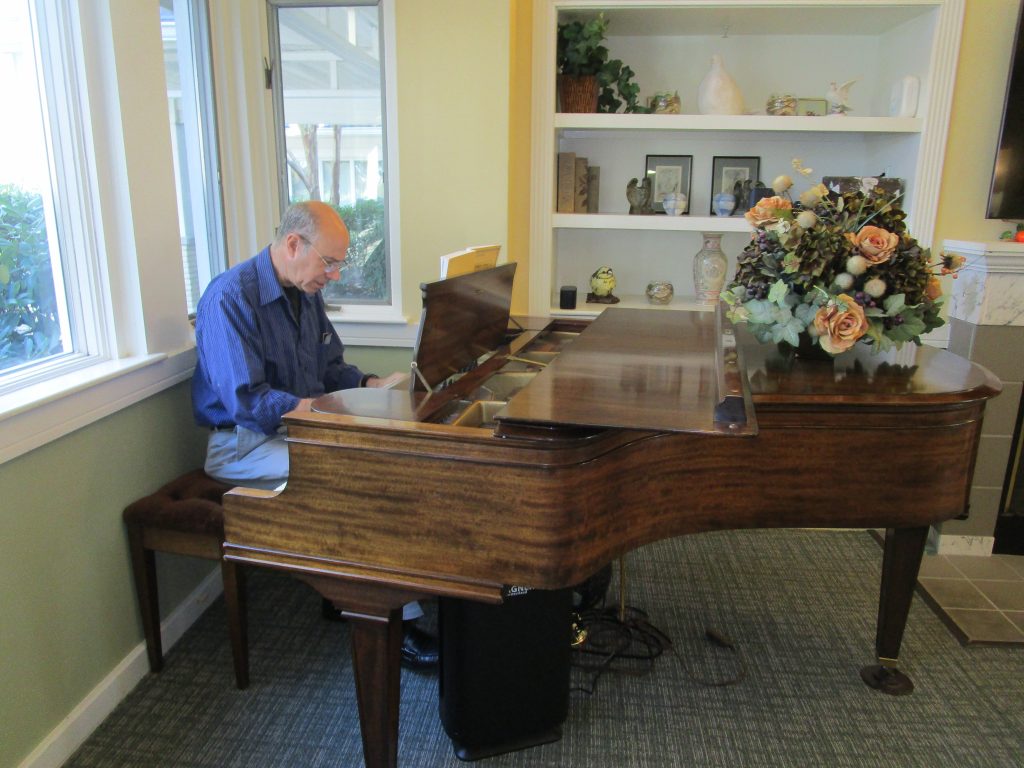
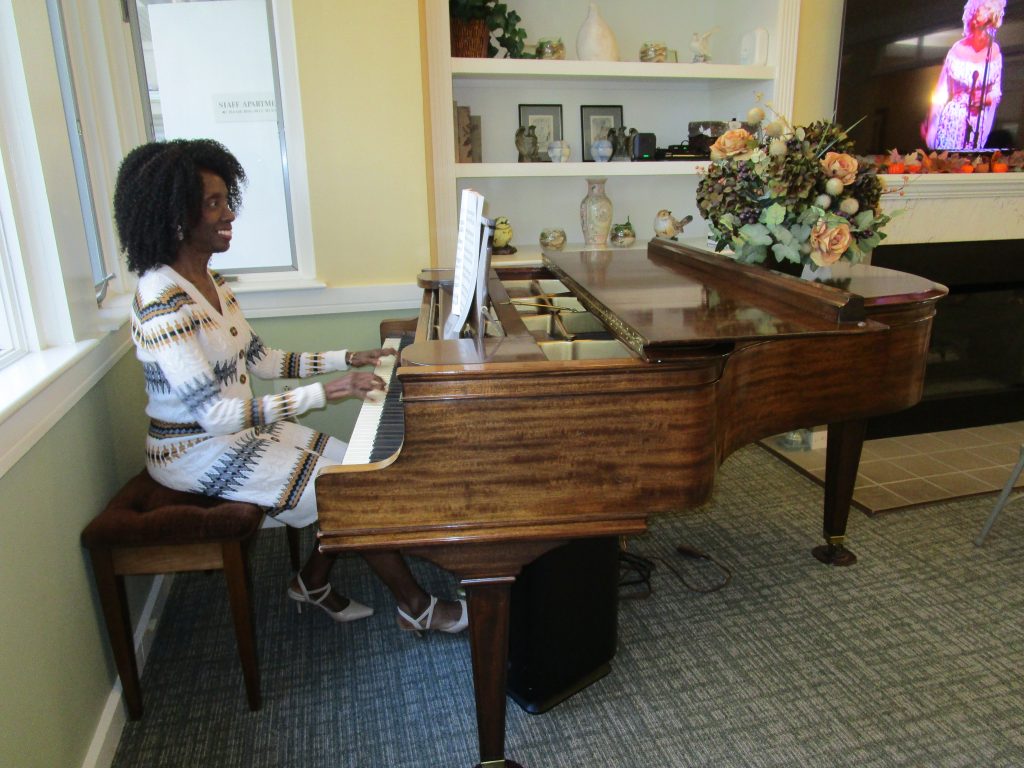
Pianist DuEwa Kamara followed with the Prelude from Suite Bergamasque by Claude Debussy (1862 – 1918). Composed in the 1800s, the Prelude is the first in the set of four movements which include “Clair De Lune.” Making her debut at Community Outreach, DuEwa held her own as she mastered Debussy’s impressionistic style with its non-traditional scales and unresolved chords. DuEwa dedicated the piece to her beloved aunt who passed away a few years ago.
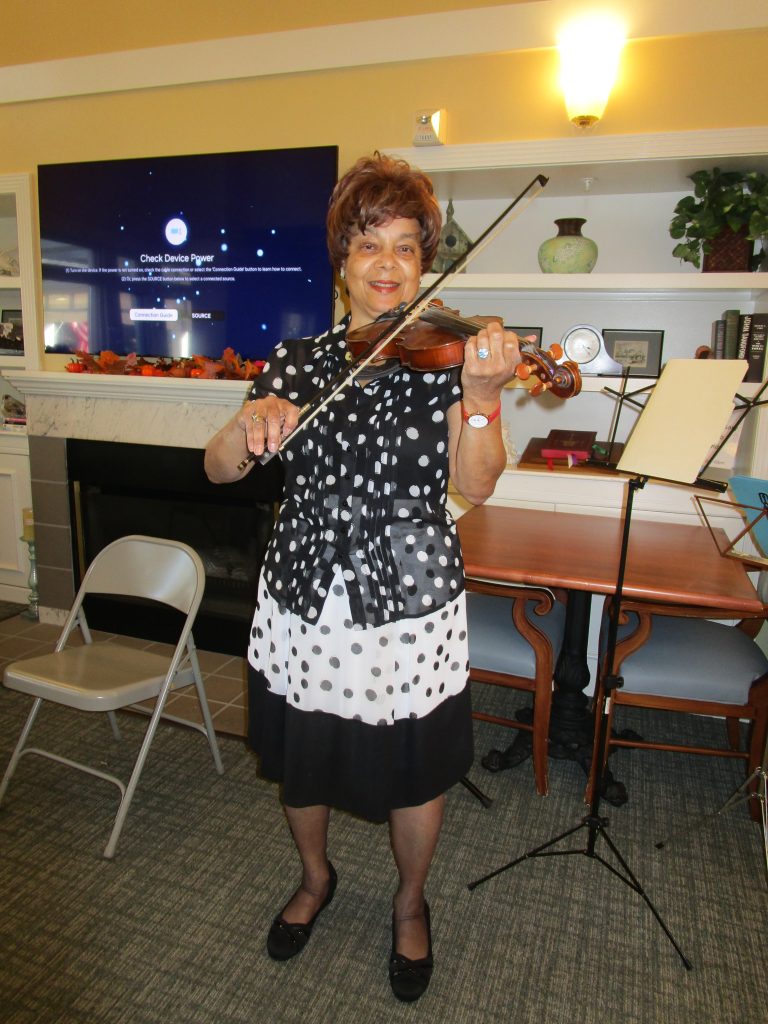
Violinist Stephanie Dailey was next. She played a calm and dance-like “Sarabande” by Carl Bohm (1844 – 1920), and a lively “That’s Amore” by Harry Warren (1893 – 1981) and lyricist Jack Brooks (1912 – 1971). The song was made famous by Dean Martin and was also featured in the movies “Rear Window” in 1954 and “Moonstruck” in 1987. Using her Bluetooth speaker accompaniment to support the melody, as always, Stephanie made her violin sing and inspired the residents to hum along.
Our third pianist, Chris Witsberger, chose Russian composers for both her pieces. She played Prelude Op. 17, No. 3 in Db by Alexander Scriabin (1872 – 1915) and Prelude Op. 38, No. 8 in F# minor by Dmitri Kabalevsky (1904 – 1987). Scriabin’s music is known for its unusual harmonies and chromaticism. He was recognized as “the romantic to end Romanticism.” Kabalevsky was a prolific composer of both piano and chamber music and, unlike Scriabin, he was known for simplicity and clarity, and the use of traditional melodies. Though challenging choices, Chris played both pieces with competence and conviction.
Despite the defective sustaining pedal on the Chickering Grand piano, Gregory Riviello succeeded in delivering noteworthy renditions of Waltz in A minor Op. Posth. and Nocturne Op. 9, No. 2 in Eb by Frederic Chopin (1810 – 1849). The Waltz was donated to the Paris Conservatory in 1955 by the Rothschild family and was therefore published years after Chopin’s death. The Eb Nocturne, written when Chopin was only 20 years old, is one of his most famous compositions. Gregory played both pieces with a certain tenderness and musical sensitivity that would have made Chopin proud.
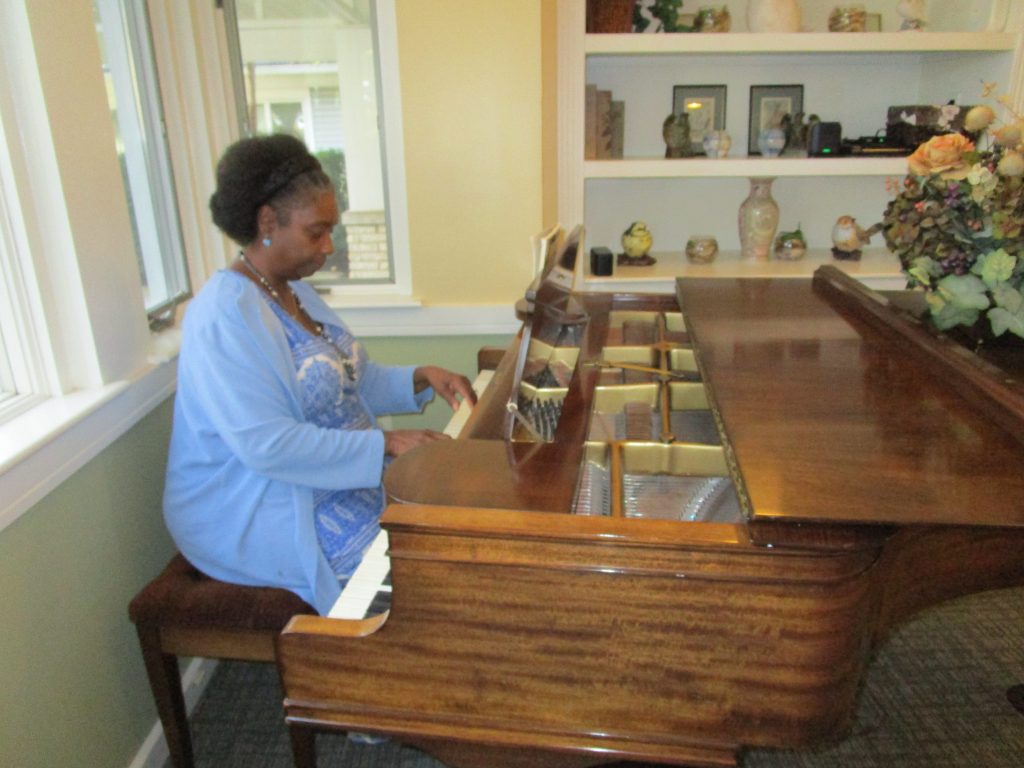
The last pianist was Carol Henry who played a blues/gospel arrangement of “Lord, Listen to Your Children Praying” composed by Ken Medema (b. 1943) and arranged by Jack Schrader (b. 1942). Carol obviously enjoyed playing the syncopated rhythms and kept the piece moving to the end, where she threw her body weight into the full chords as they crescendoed majestically to the final cadence.
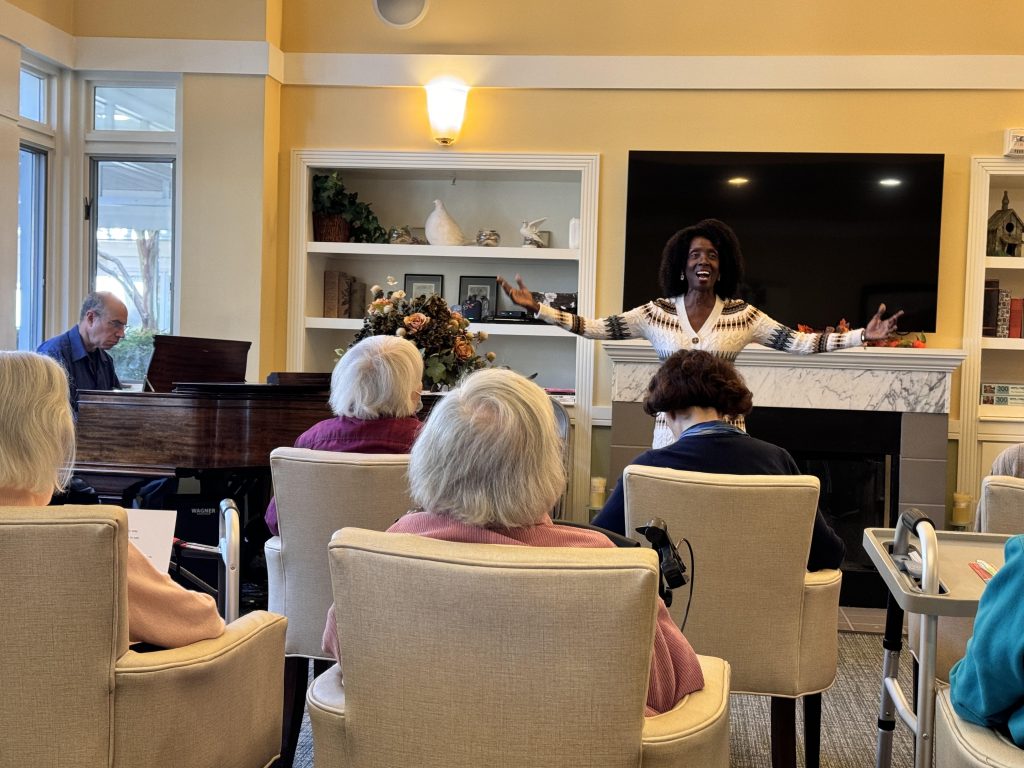
The recital ended with a grand singalong led by Carol Henry accompanied by Gregory Riviello on the piano. Printed words were distributed, and the residents thoroughly enjoyed singing “It is Well with My Soul” with lyrics by Horatio Spafford (1828 – 1888) and music by Philip Bliss (1838 – 1876). The song was so well received that the final chorus was repeated. The residents applauded heartily at the end. The icing on the cake, however, was a surprise and unplanned rendition of “Happy Birthday to You” by both the performers and the residents who had discovered that October 19th was Carol’s birthday!